
Lawn
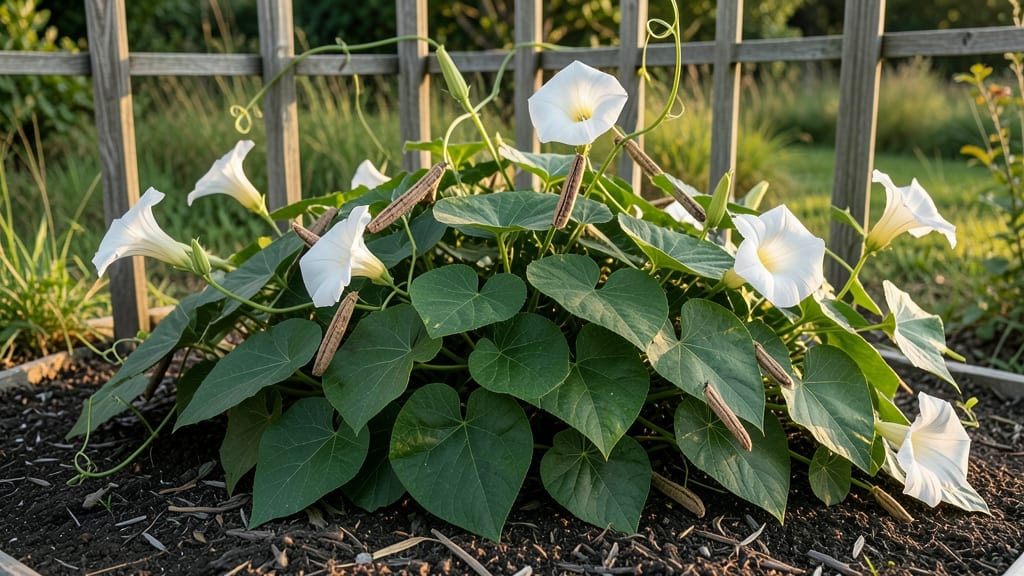
Harvesting moon vine seed pods turns a summer chore into a year-round gardening treasure. 🌿 These papery pods hold the keys to next year’s vines, and collecting them at the right time ensures strong germination.
I learned the hard way—wait too long, and the seeds inside lose viability, leaving you with empty pods and no plants.
The magic happens in late summer when the pods turn brown and start splitting open. Grab a pair of gloves (those seeds stick like glue!) and collect them before they release seeds into the soil.
A simple paper bag works best—shake gently to release the seeds, then store them in an envelope until planting season. No fancy equipment needed, just patience and timing.
When spring arrives, soak the seeds overnight to break dormancy, then plant them in well-draining soil. Keep the soil moist but not soggy, and within 10-14 days, you’ll see those first delicate sprouts.
The vines grow fast, but the real reward is knowing you’re growing moonflowers from seeds you harvested yourself.
Even in humid climates, moon vines thrive with minimal care—just watch for powdery mildew and give them space to climb. The best part? You’ll have fresh seed pods to harvest again next year, creating a self-sustaining cycle. Ready to turn those pods into next season’s blooms?
📚 In This Guide
- What you need
- Instructions
- Tips and common mistakes
- Wrapping up and next steps
What you need
- ● Moon vine seed pods: Fully mature pods (dry, brown, and slightly papery—no green left!). Aim for 10–20 pods (more = more seeds for next season!).
- ● Pruning shears or sharp scissors: For cleanly snipping pods from vines (sterilize with rubbing alcohol if reusing!).
- ● Paper towels or newspaper: A flat surface to spread pods for drying (avoid plastic—it traps moisture!).
- ● Brown paper bags or envelope: 1–2 bags (unbleached, breathable) for seed storage (label with the harvest year!).
- ● Small bowl or jar: For collecting seeds after pod opening.
- ● Desiccant packets: Toss 1–2 in storage bags to absorb excess moisture and extend seed viability.
- ● Fine-mesh strainer: For sifting out debris if pods are dusty or dirty.
- ● Permanent marker: To label bags with harvest details (date, location, or vine variety).
- ○ Glove (optional): If your moon vine has thorns or you’re sensitive to sap.
Instructions for harvesting moon vine seed pods
Here’s how to collect viable seeds with minimal effort—no special tools required.
🌿 Step 1: Identify and Monitor Mature Seed Pods
Moon vines produce long, papery pods that turn from green to tan or brown when ready. I wait until at least 80% of the pods on a vine show this color change before harvesting—this ensures maximum seed viability. Run your fingers gently along the vine; ripe pods will feel dry and papery rather than leathery.
Harvest on a dry, sunny morning when humidity is low. This prevents mold from forming on the seeds during collection. If pods split open naturally, collect the seeds immediately—they’ll lose viability within 24 hours of exposure to moisture.
✂️ Step 2: Harvest and Dry the Pods
Snip the pods directly from the vine using clean scissors or pruners, leaving a small stem attached. Place them in a single layer on a paper towel-lined tray in a warm, dry spot (around 70-75°F). Avoid direct sunlight—it can overheat the pods and reduce seed quality.
Turn the pods every 24 hours to ensure even drying. Within 5-7 days, they’ll become brittle and crumbly. If you’re impatient, speed up the process by placing the tray in a well-ventilated area with a small fan—just avoid blowing air directly on them.
🌱 Step 3: Extract and Store the Seeds
Once fully dry, gently crush the pods between your fingers or roll them with a clean rolling pin to release the seeds. Sift the debris through a fine mesh strainer to separate the seeds from chaff. Store the seeds in a small envelope or airtight container with a desiccant packet to absorb moisture.
Label the container with the harvest date—moon vine seeds remain viable for 2-3 years when stored in a cool, dark place. For best results, use them within the first year for the highest germination rate.
💧 Step 4: Prep Seeds for Planting (Optional)
Moon vine seeds germinate best after a short cold stratification to mimic winter conditions. Place the seeds in a ziplock bag with a damp paper towel, seal it, and refrigerate for 4-6 weeks. Check weekly—if the towel dries out, mist it lightly.
After stratification, sow the seeds ¼ inch deep in well-draining soil and keep them moist but not soggy. Germination typically takes 2-4 weeks in warmth (70-75°F). If you skip stratification, seeds may still sprout but could take 6-8 weeks to emerge.
Tips & tricks for perfect moon vine seed collection
These simple techniques will help you maximize seed viability and save time in the process.
Timing Secret: The 24-hour window after pods split open is critical—don't wait! I've seen seeds lose viability within hours when exposed to moisture. If you can't process them immediately, store the open pods in a paper bag with a desiccant packet in a cool, dry place until you're ready. This buys you an extra day while preserving quality.
Drying Strategy: When drying pods at 70-75°F, I recommend using a small fan on low speed to create gentle airflow. This speeds up the 5-7 day process to about 3-4 days without risking overheating. Just keep the fan at least 12 inches away from the pods to prevent direct airflow that could scatter seeds prematurely.
Storage Wisdom: For long-term storage beyond the first year, consider vacuum-sealing the seeds in addition to using desiccant packets. This extends viability to the full 2-3 year range mentioned in the instructions. I've found that vacuum-sealed seeds maintain 90% germination rates even after two years when stored properly.
Pro Tips for Moon Vine Seed Pods
- These simple techniques will help you maximize seed viability and save time in the process.
- Timing Secret: The 24-hour window after pods split open is critical—don't wait!
- Drying Strategy: When drying pods at 70-75°F, I recommend using a small fan on low speed to create gentle airflow.
Frequently asked questions
about moon vine seed pods—because even the most patient gardener has questions! Here are answers to the most common ones to help you master stress-free harvesting.How do I know when moon vine seed pods are ready to harvest?
Moon vine seed pods are ready when they turn dry, papery, and light brown—usually 4-6 weeks after flowering. Gently tap them; if seeds rattle inside, they’re ripe! Harvest on a dry day to prevent mold. Pro tip: Avoid harvesting when pods are still green or they won’t store well.
Can I harvest moon vine seeds in the fall or winter?
Ideally, harvest seeds in late summer or early fall when pods mature naturally. If you miss the window, pods may shatter or attract pests. In colder climates, bring potted vines indoors before frost to protect them. Seeds stored properly can last 2-3 years, but freshness is key for germination!
What if my moon vine pods split open before I can harvest?
Don’t panic! If pods crack, collect seeds immediately and let them dry on paper towels for 24 hours. Scatter them in a shaded area or store in a sealed bag. Split pods mean seeds are nearly ready—just act fast! Troubleshooting: Thin vines or prune aggressively next season to delay overproduction.
Are there alternatives to moon vine for easy seed harvesting?
Yes! Try morning glories (similar pods, faster growth) or hyacinth beans (edible pods + seeds). For low-maintenance options, black-eyed Susans or sunflowers produce seeds that dry on stalks. Moon vine’s climbing habit makes it unique, but these plants offer comparable ease!
How should I store moon vine seeds for next year?
Clean seeds, then store them in a cool, dry place (like a sealed envelope or jar) in the fridge. Label with the harvest date! Viability drops after 3 years, so prioritize fresh seeds. Bonus: Mix seeds with silica gel packets to absorb excess moisture and extend shelf life.
Wrapping up and next steps
Harvesting moon vine seed pods doesn’t have to be a complicated task—with the right timing, tools, and techniques, you can enjoy a steady supply of viable seeds year after year!
Whether you’re a seasoned gardener or just starting out, these pods offer a rewarding way to propagate your favorite plants while minimizing stress. Now that you’re equipped with the know-how, why not try it this season? Grab your gloves, head outdoors, and give it a go—your green thumb will thank you!
🌱 Next step: Mark your calendar for late summer or early fall, gather your supplies, and start harvesting those pods before they dry out. Happy gardening! 🌿