
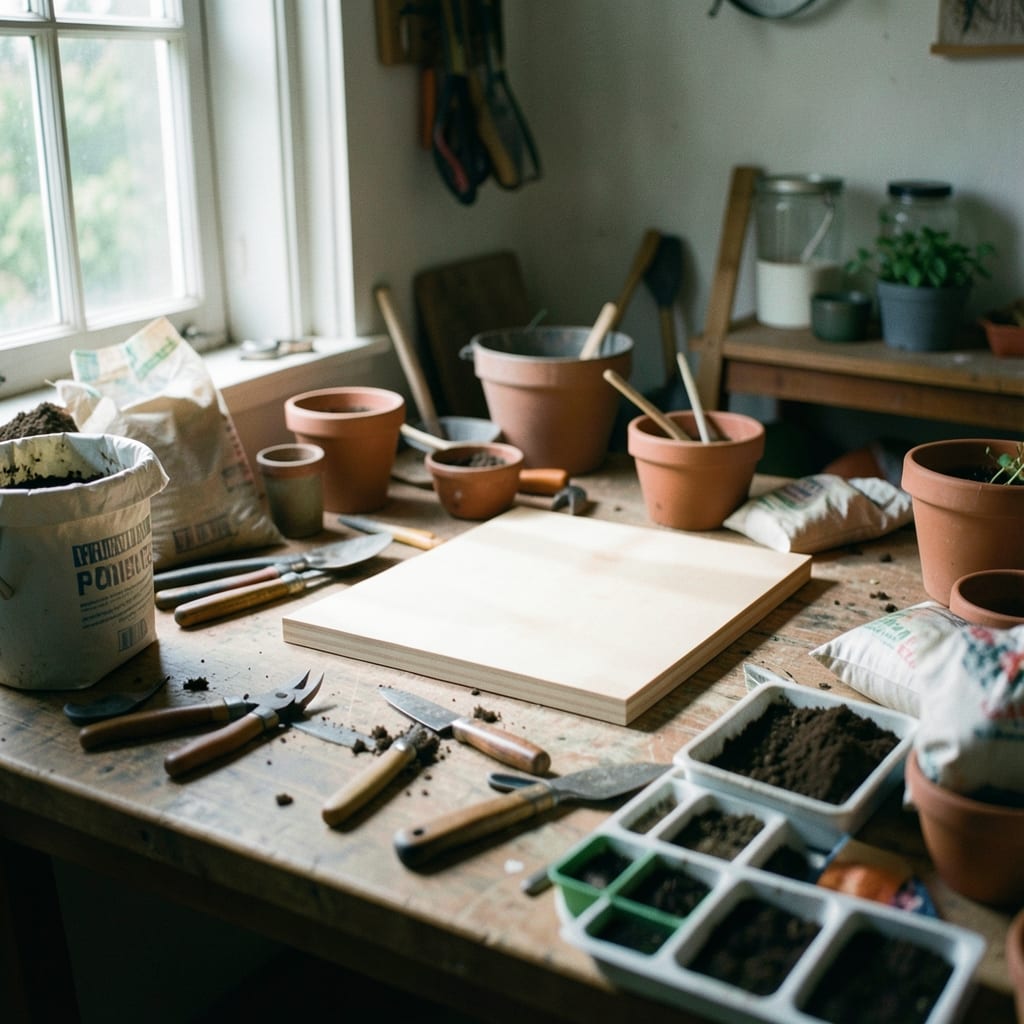
What this work is made with
This page is a list of things, not a story. Gardening is a practice of hands and soil, of patience and small victories—so the work here depends on more than words.
Instead, it depends on the objects that shape it: the tools that wear down, the things that bend to use, and the ones that refuse to break despite being wrong for the job. This is how you learn what a site is really built on.
Here, you’ll find the things that grow *Seedling Pot*—a place for gardening tips, outdoor cultivation, and the quiet joy of watching something take root. No mission statement, no grand vision: just the inventory of what holds it together.
The things that do the work
These are the four things that shape what you’ll read here. A trowel that’s lost its edge, a wooden crate that’s split in half, a pair of gloves that no longer fit, and a stone that’s been smoothened by years of use. They are not glamorous. They are not new.
But they are what this work depends on.
The trowel
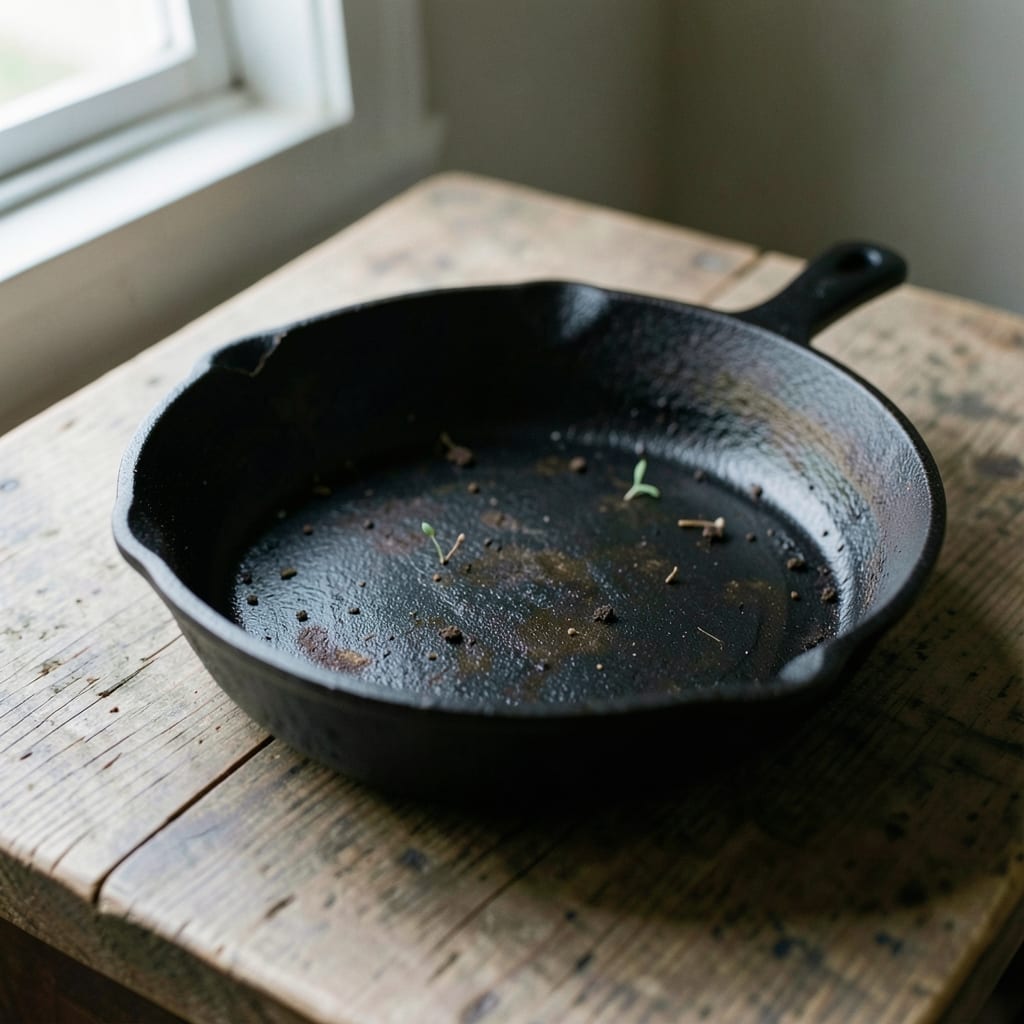
A five-inch stainless steel trowel with a handle wrapped in frayed twine. It’s been here since the first raised bed, nearly ten years ago, and the blade is now nicked along the edge from digging into rocks that shouldn’t have been there.
The twine is held together with a knot tied by my grandfather, who said a loose handle was ‘an invitation to drop it.’
It taught me that the best tools aren’t the ones that last forever—they’re the ones that remind you, every time you use them, of the work that’s already been done.
The nick in the blade is a map of every mistake I’ve made planting too deep, and I keep it sharp anyway.
The wooden crate
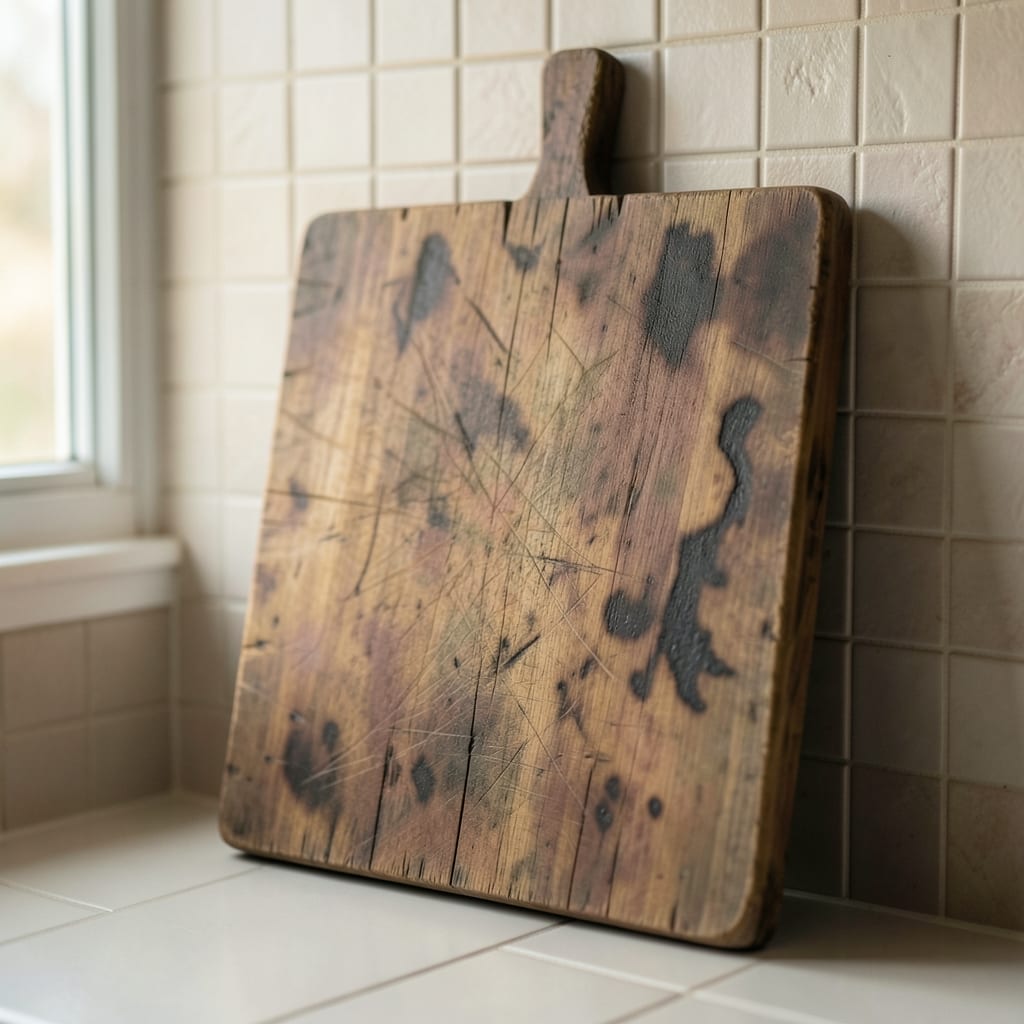
A repurposed apple crate, warped and split down the middle, propped up with a brick. It’s been here since the site’s first photo shoot, holding seedlings that outgrew it before they were ready to be planted.
The wood is splintered where the nails rusted through, and the bottom is lined with an old tarp held down by a rock. It cost nothing and was never meant to last.
It taught me that the things that matter in gardening aren’t the ones that look right—they’re the ones that hold what needs holding. Every seedling that leaned against its sides before being transplanted is proof that it worked, even if it fell apart by the end of the season.
The gloves
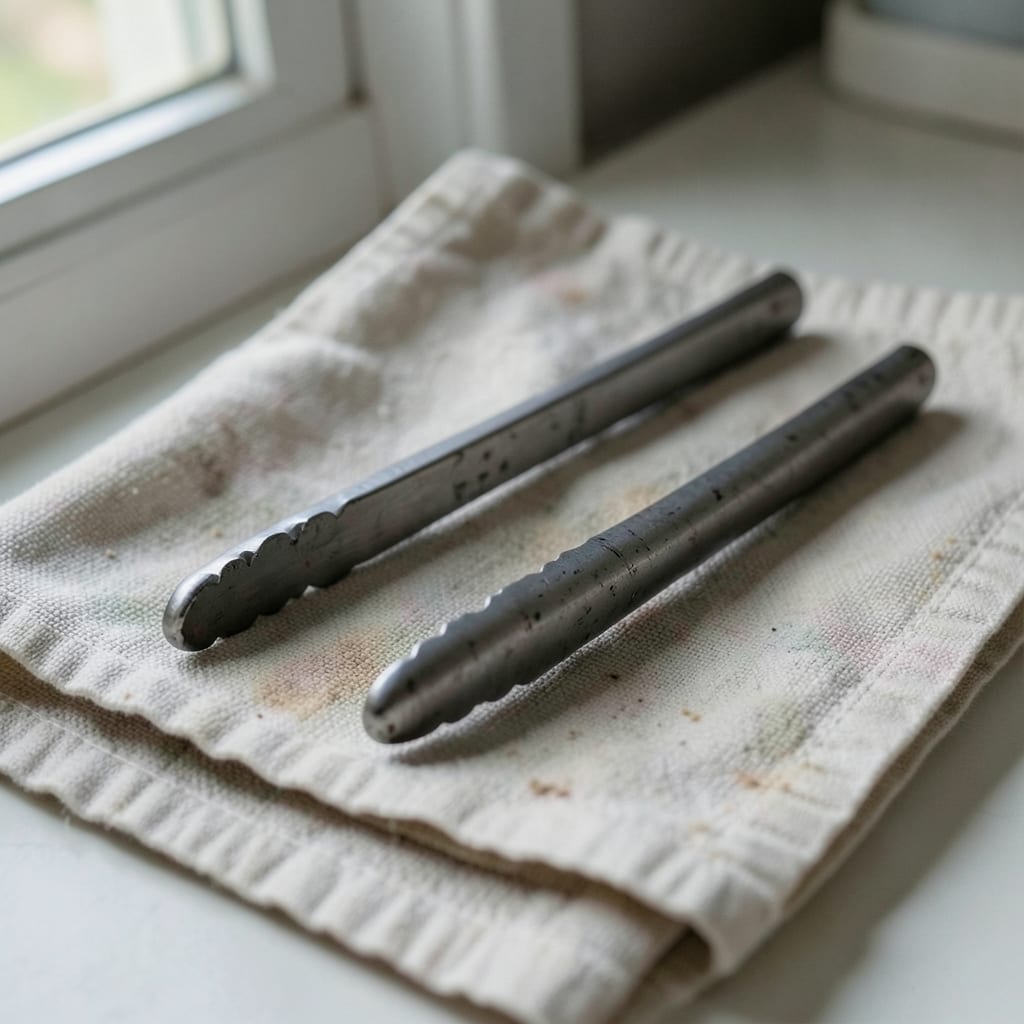
A pair of heavy-duty gardening gloves, size medium, bought in a clearance bin five years ago. The fingertips are worn through from handling thorns and rough stems, and the elastic is stretched out from years of being pulled on too tight.
They’re too small now, but I still wear them because the blisters they prevent are worse than the discomfort.
They taught me that some tools stop being useful long before they break. The holes in the fingertips mean I’ve learned to work around them—pinching stems carefully, avoiding overhandled plants—but they also mean I notice every scratch, every callus, every time my hands forget what they’re doing.
Gardening is a physical practice, and these gloves are the record of it.
The stone
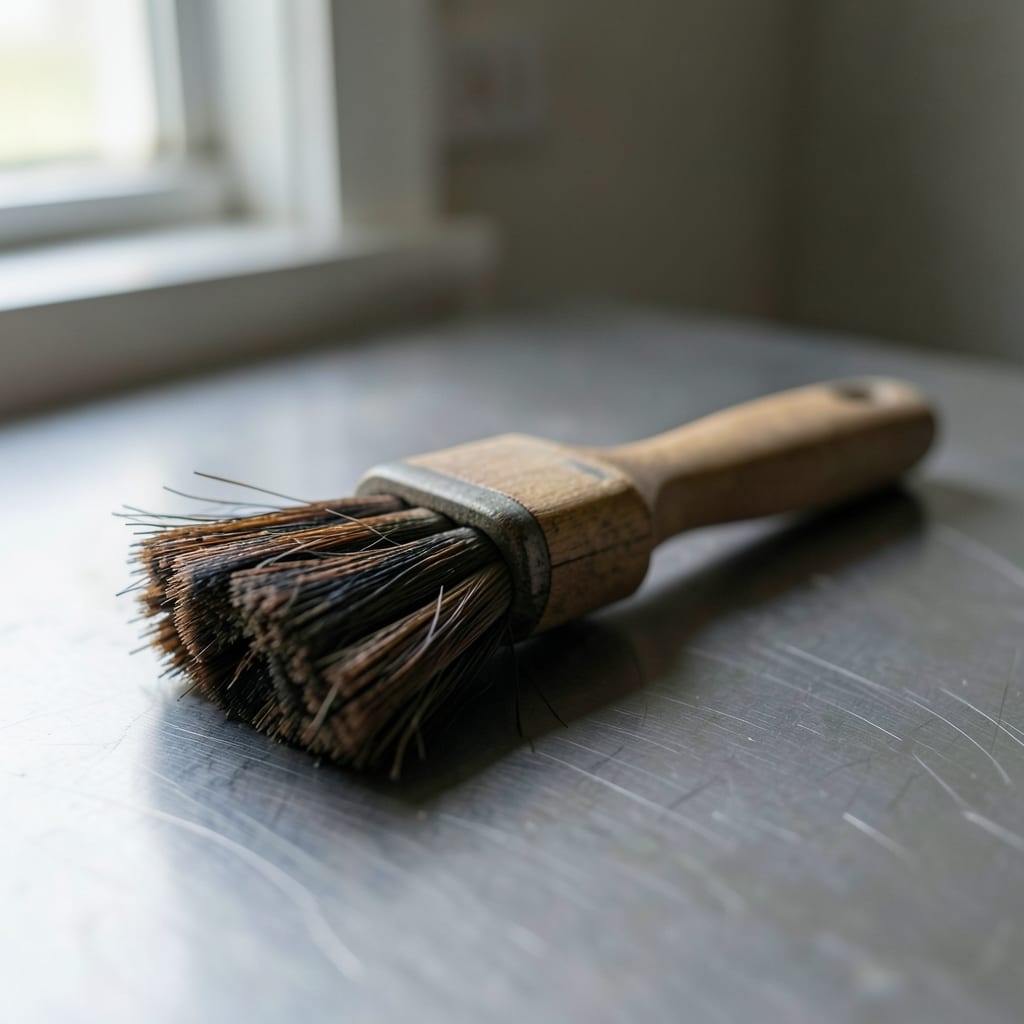
A river-worn basalt the size of a fist, found on the edge of a creek bed. It’s been here since the first time I wrote about companion planting, used to weigh down stakes or crush up soil clumps.
The surface is smooth where it’s been handled, rough where it hasn’t, and it’s missing a chunk from the top—lost years ago when it slipped from my grip while I was kneeling.
It taught me that the best tools are the ones that don’t need to be right. It’s not perfect for anything, but it does the job: holds a stake, breaks up dirt, sits in the sun when I forget to put it down.
And the missing piece is a reminder that even the sturdiest things can’t take everything.
What is not in the drawer
This work does not depend on things that measure or promise.
There are no digital scales here, no soil pH kits, no timers set to ‘exactly.’ The things that matter—when to plant, how deep to dig, whether a seedling is struggling—are learned by feel, by watching, by the slow work of paying attention.
Deliberately absent
- Soil test kits (the best soil is the kind you learn by working it)
- Brand-new tools (the worn ones tell the truth)
- Perfectly straight edges (gardens are never perfect)
- A schedule (growth doesn’t follow one)
Behind the scenes

I am Warren Laurent, the founder and editor of *Seedling Pot*. I am the one who writes the tips, the stories, and the failures—because gardening is as much about what doesn’t work as what does.
I came to this from my grandfather’s hands in the dirt, his voice low with patience as he showed me how to coax life from a stubborn seed. He handed me the trowel when I was eight, and by twelve, I was already forgetting to water things before they wilted.
The habit of paying attention stuck.
This work has given me a permanent ache in my knees from kneeling too long, a habit of noticing the first signs of rot before they spread, and a reflex to check the soil before I reach for a tool.
I can no longer walk past a garden without seeing what’s struggling—and what’s thriving—and I don’t want to stop.
I am here to write the kind of gardening advice that actually works: the tips that come from real dirt, the stories that come from real failures, and the quiet satisfaction of watching something grow. No grand lessons, no perfect blooms—just the things that matter.
Why any of this matters to you
These things—the worn trowel, the split crate, the gloves with holes, the stone with a missing piece—are why the advice here feels real.
They’re proof that the work isn’t done by someone who’s never gotten their hands dirty, never lost a plant to overwatering, never had to improvise when a tool wasn’t up to the job. Every page you read here is shaped by the same hands that shaped these objects.
You’ll find no perfect gardens, no foolproof methods, no promises that this will work the first time. Instead, you’ll find the things that *have* worked—after the failures, after the adjustments, after the slow learning that comes from watching something grow. That’s the kind of gardening this site is for.
Every tip here is tested in real soil, with real mistakes, and real successes. The advice isn’t polished—it’s practical, and it’s honest. If you’re looking for a garden that grows without struggle, you’re in the wrong place. But if you’re looking for one that grows *with* you, this is where to start.
The guides are grouped by category: Advice, Aphids, Blooming, Companion Plants, Container Gardens and Diseases.