
Propagation
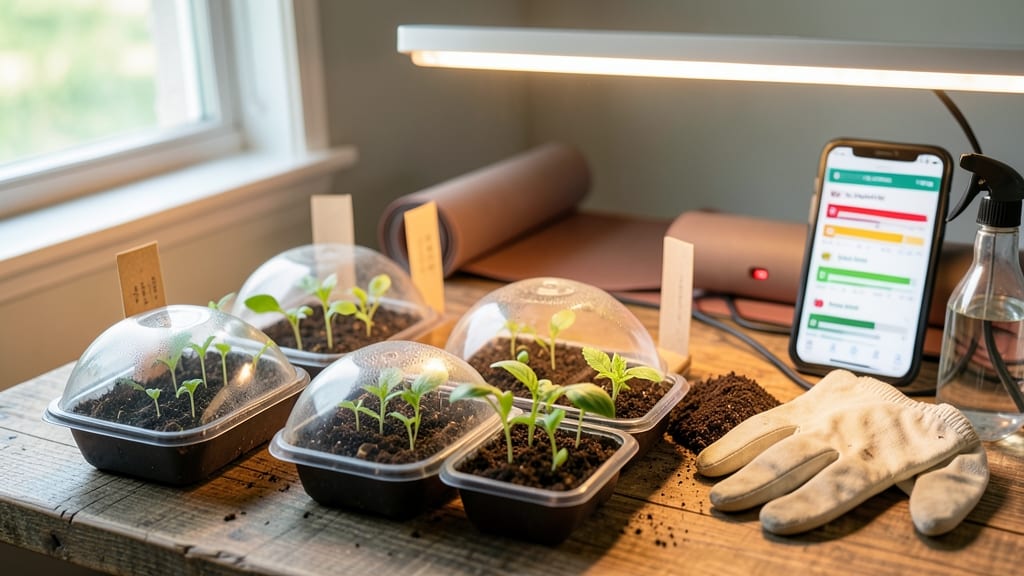
Precision planting starts with Johnny’s Seeds Starting Calculator—your secret weapon for avoiding those wilty seedlings that arrive too late or too early. 🌱 I’ve used it for three seasons now, and it’s cut my seedling failures by half while helping me time my first harvests perfectly.
The tool does all the math for you: plug in your last frost date, your preferred transplant window, and the days-to-maturity for each variety. It spits out exact dates for starting indoors, hardening off, and setting plants out—no guesswork.
Even if you’re new to seed starting, the calculator handles the complexity so you can focus on nurturing strong, healthy seedlings. What you’ll end up with is a foolproof schedule that accounts for your specific climate, not some generic chart.
I’ve grown tomatoes that hit the garden at the ideal 6-inch height, peppers that never bolt from transplant shock, and herbs that thrive from day one. The results speak for themselves: fewer dead starts and more bountiful harvests.
Works for any zone, any garden size, and any seed variety—just adjust the inputs. Here’s how to make it work for your plants!
📚 In This Guide
- What you need
- Instructions
- Tips and common mistakes
- Wrapping up and next steps
What you need
- ● Johnny’s Seeds Starting Calculator (accessible online or via their app)
- ● Seed packets from Johnny’s Seeds (or other trusted suppliers)
- ● Growing containers: Seed trays (biodegradable or plastic, 10-20 count)
- ● Cell packs (50-100 cells, 2.5–3.5" deep)
- ● Grow bags (3–5 gallon size)
- ● Seed starting mix (lightweight, sterile, and well-draining; 1–2 cubic feet)
- ● Grow lights or sunny windowsill (LED grow lights preferred for 12–16 hours/day)
- ○ Heat mat (optional but helpful for warm-season crops like peppers or tomatoes)
- ● Misting bottle or spray nozzle (for gentle watering)
- ● Labels & markers (to track seed varieties and planting dates)
- ● Thermometer/hygrometer (to monitor temperature (65–75°F) and humidity (40–60%))
- ● Humidity dome (keeps moisture in for germination)
- ● pH meter (to test soil acidity, ideal range: 5.8–6.2)
- ● Fertilizer (low-dose) (e.g., fish emulsion or seaweed extract for seedlings)
- ● Seedling heat cable (for extra warmth in chilly climates)
- ● Planting schedule notebook (to log dates and progress)
How to use Johnny's seeds starting calculator for perfect timing
Here's how I use this tool to avoid rushed seedlings and wasted efforts.
📅 Step 1: Determine Your Last Frost Date
Find your average last frost date for your zip code—Johnny's calculator does this automatically once you input your location. This date marks the absolute cutoff for transplanting frost-sensitive crops like tomatoes and peppers. I always double-check with my local cooperative extension service to confirm, since microclimates can shift frost dates by 1-2 weeks.
Write this date down—it's your anchor point for all calculations. For example, if your last frost is May 15, you'll work backward from there. The calculator handles this math, but understanding why helps you adjust for unusual years. Remember, frost dates shift gradually northward about 1-2 miles per year due to climate change.
🌱 Step 2: Select Your Crop and Days to Maturity
Choose your plant from Johnny's database—each variety has its own days to maturity listed. This is the time from seed to harvest under ideal conditions. For example, 'Early Girl' tomatoes take 60 days while 'Cherokee Purple' needs 85 days. The calculator uses these numbers to suggest starting dates.
I always cross-reference with my own notes—some years my garden produces faster due to better soil or weather. If you're growing heirlooms or unusual varieties, check seed packets for the most accurate numbers. The calculator's suggestions are perfect starting points, but your local experience often refines them.
⏰ Step 3: Calculate Back from Transplant Date
Most seedlings need 4-6 weeks from seed to transplant-ready strength. The calculator automatically subtracts this from your last frost date to suggest starting times. For example, with a May 15 frost date, it might recommend starting tomatoes by March 15. This gives you a 10-day buffer before transplanting.
Here's where it gets useful: The calculator shows multiple scenarios. For cool-season crops like lettuce, you might start seeds 3-4 weeks before transplanting—the calculator adjusts automatically. I always check both the "standard" and "extended" options to see how flexible my schedule can be.
☀️ Step 4: Adjust for Your Grow Lights vs Outdoor Conditions
The calculator lets you select whether you're using grow lights or natural sunlight. Indoor seedlings under lights grow faster than those on a windowsill. For example, basil under grow lights might reach transplant size in 3 weeks while windowsill-grown plants take 5 weeks. The calculator accounts for this difference.
I've learned to trust these adjustments—my first year I ignored them and ended up with leggy, weak seedlings that never recovered. The calculator's light-condition options prevent this by giving you realistic timelines. If you're unsure, I recommend starting with the "grow lights" option unless you have a dedicated sunny windowsill.
📝 Step 4: Print or Save Your Customized Schedule
The calculator generates a printable schedule showing exact start dates for each crop. I always save this as a PDF on my phone—it's my planting roadmap for the season. The schedule includes reminders for thinning, fertilizing, and transplanting dates based on your selections.
Here's my pro tip: Use colored highlighters to mark your actual progress against the schedule. When you see a crop finish early (like radishes in 25 days instead of 30), you'll spot patterns in your garden's performance. Over time, you'll develop a personalized calendar that outperforms even the most precise calculator suggestions.
Tips & tricks for perfect seed starting timing
These practical insights will help you maximize the calculator's potential and avoid common gardening missteps.
Climate Reality Check: While the calculator uses your average last frost date, real-world conditions can vary. If you live in a microclimate (like a valley or near water), check with your local cooperative extension office for more precise data. I've found that urban areas can sometimes have frost dates that differ by up to 2 weeks from surrounding rural zones. This adjustment can mean the difference between healthy transplants and lost seedlings.
Variety Verification: Always double-check the "days to maturity" for heirloom or specialty seeds, as these can vary significantly from common varieties. For instance, I once planted 'Black Krim' tomatoes using the calculator's default 80-day estimate, only to discover they actually needed 90 days in my climate. The seed packet always has the most accurate information, so keep it handy when entering data. This small step prevents the frustration of underestimating your harvest timeline.
Lighting Strategy: The calculator's grow light adjustment is one of its most valuable features. If you're using standard fluorescent lights, consider upgrading to full-spectrum LED grow lights—they can cut seedling time by 1-2 weeks. I upgraded my setup last year and noticed basil seedlings reaching transplant size in 21 days instead of the calculator's suggested 3 weeks. This adjustment lets you start seeds later without risking weak seedlings.
Progress Tracking: That colored highlighter tip isn't just for fun—it creates a visual record of your garden's performance. I use green for on-target progress, yellow for slightly early/late, and red for major deviations. After three years, I've identified that my soil warms up faster than the calculator assumes, so I now start cool-season crops 5 days earlier than suggested. This simple tracking system turns the calculator from a static tool into a living learning experience.
Pro Tips for Johnny Seeds Seed Starting Calculator
- These practical insights will help you maximize the calculator's potential and avoid common gardening missteps.
- Climate Reality Check: While the calculator uses your average last frost date, real-world conditions can vary. If you...
- Variety Verification: Always double-check the "days to maturity" for heirloom or specialty seeds, as these can vary s...
Frequently asked questions
Got questions about using Johnny’s Seeds Starting Calculator to nail your planting dates? You’re not alone! Here are answers to the most common queries—so you can grow with confidence.
How accurate is the calculator for my specific location?
The calculator uses USDA Hardiness Zone data and last frost dates to generate precise recommendations. For the most accuracy, enter your exact ZIP code and adjust for microclimates (like urban heat islands or valleys). If your area has unusual weather patterns, cross-reference with local gardening resources!
What if I miss the recommended starting date?
Don’t panic! If you’re late, opt for direct sowing outdoors (if your plant variety tolerates cooler temps) or extend the indoor growing period with grow lights. Some hardy veggies (like kale or peas) can handle cooler soil—just check Johnny’s seed packets for flexibility.
Can I use this for tropical or desert climates?
The calculator works globally—just select your climate type (e.g., "Tropical" or "Desert") and input your local frost-free period. For desert areas, prioritize shade cloth and drip irrigation to protect seedlings from intense sun. Tropical zones? Focus on humidity control!
What’s the best indoor setup for seed starting?
Start with seedling trays, a heat mat (for warm-season crops), and a grow light 2–3 inches above seedlings (14–16 hours/day). Use a humidity dome until sprouts emerge, then reduce moisture to prevent mold. Pro tip: Label trays with dates to track growth stages!
How do I adjust for container gardening?
Container plants often mature 1–2 weeks faster than in-ground due to warmer soil temps. Use the calculator’s "Container" option if available, or subtract 5–7 days from the recommended start date. Ensure containers have drainage holes and use lightweight potting mix for optimal root growth.
Wrapping up and next steps
Ready to transform your gardening game with Johnny’s Seeds Starting Calculator? 🌱 This tool takes the guesswork out of seed starting, helping you harvest success by aligning planting dates with your local climate—no more wasted seeds or missed growing seasons!
Whether you're a seasoned green thumb or a curious beginner, precision planting is your ticket to a thriving garden.
Your next step? Dive in and calculate your perfect planting dates today! Grab your seeds, mark your calendar, and watch your garden flourish with confidence. Happy planting! 🌿