
Lawn
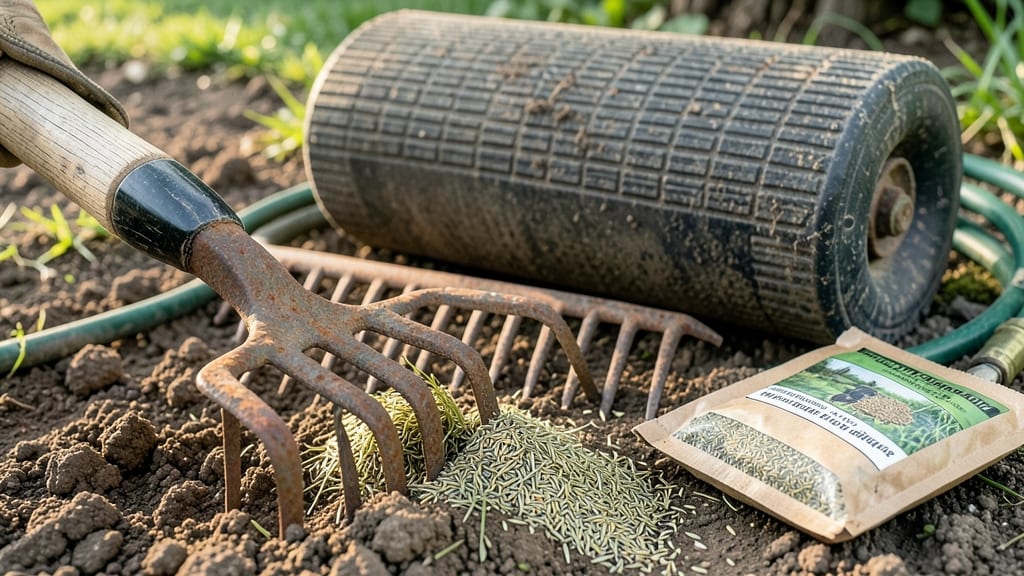
Planting grass seed on hard dirt feels like fighting a losing battle—until you break through the compacted layer. 🌱 I’ve turned my own stubborn clay soil into a lush lawn by tackling the root problem first: the unyielding dirt beneath.
The secret isn’t brute force—it’s smart prep that lets water, roots, and seeds work together instead of fighting each other.
Start by loosening the top 4-6 inches of soil with a garden fork or aerator, breaking up those stubborn clumps without pulverizing them into dust.
Mix in 2-3 inches of compost or aged manure to feed the soil and improve its structure—this step alone makes all the difference between seedling success and bare patches. For extra tough spots, rent a core aerator to pull out small soil plugs and let air and water penetrate deeper.
Once the ground is ready, scatter your grass seed evenly (no need to bury it—just press it lightly into the loosened soil). The first 2 weeks are critical: keep the soil consistently moist like a wrung-out sponge, not soggy.
You’ll see those first green blades push through in 7-14 days, and within a month, your lawn will start looking like the vibrant carpet you’ve been dreaming of.
Here’s the kicker: the real payoff comes after the first mow. With proper prep, your grass will establish deeper roots, resist drought better, and outcompete weeds naturally.
And yes, it’s worth the effort—my lawn now stays green through summer heat and winter freezes, something I never thought possible on that hardpan dirt.
📚 In This Guide
- What you need
- Instructions
- Tips and common mistakes
- Wrapping up and next steps
What you need
- ● Grass seed: Choose a high-quality, dormant-resistant variety suited to your climate (e.g., 10–20 lbs per 500 sq ft for full coverage).
- ● Garden rake: A sturdy, heavy-duty metal rake (8–12" teeth) to break up compacted soil.
- ● Broadfork or digging fork: 6–8 tines, 18–24" long to loosen deep layers without turning soil.
- ● Hand trowel or spading fork: For precision work in smaller areas or around obstacles.
- ● Lawn roller: A 100–150 lb manual roller (20–30" wide) to press seed into soil.
- ● Hose with adjustable nozzle: For gentle watering (avoid high pressure!).
- ● Soil amendment: Compost (2–3 inches) or topsoil mix to improve drainage and fertility.
- ● Straw or erosion control blanket: ½–¾ inch thick to protect seed from wind/washout.
- ● Soil test kit: Check pH and nutrient levels (ideal pH: 6.0–7.0 for most grasses).
- ● Lime or sulfur: Adjust pH if needed (10–20 lbs per 1,000 sq ft).
- ● Starter fertilizer: Low-nitrogen (5–10 lbs per 1,000 sq ft) for seed germination.
- ● Knee pads or gloves: Protect your hands and joints during heavy raking!
- ● String line or spray paint: Mark sections for even seed distribution.
How to plant grass seed on hard dirt: Step-by-Step soil prep
Here’s how I break through compacted soil to give grass seed the perfect start—no tilling required.
🪴 Step 1: Loosen the Soil with a Broadfork
Rent or borrow a broadfork (a four-tined cultivator) and insert it 8-10 inches deep into the soil. Push down firmly with your foot on the handle, then rock it side to side to break up the hardpan. Work in overlapping rows to avoid missing spots. You’ll feel resistance at first, but once you hit the compacted layer, it’ll give way with a satisfying crack.
Stop when the tines slide in easily—this means you’ve loosened the soil enough for roots to penetrate. Avoid walking on the treated area after this step, as it can compact the newly aerated soil.
💧 Step 2: Rake and Level the Surface
Use a stiff-bristle rake to level the soil and remove any remaining clumps. Drag the rake in straight lines first, then cross-rake at a 90-degree angle to create a fine, even texture. Your goal is a smooth surface with no rocks or debris larger than ¼ inch—these can block seed-to-soil contact.
Look for a uniform, crumbly texture. If the soil still feels hard or clumpy in spots, go back with the broadfork on those areas. The seedbed should resemble well-worked garden soil, not concrete.
✂️ Step 3: Spread a Thin Layer of Compost
Shake a ¼-inch layer of compost evenly over the prepared soil using a drop spreader. This adds organic matter to improve soil structure and provides nutrients for the new grass. Work the compost into the top ½ inch of soil with the rake, just enough to mix it in without burying it too deep.
Here’s the thing—don’t overdo it. A thin layer is enough to break the hardpan without smothering the seed. You’ll see the soil darken slightly as the compost blends in.
🌱 Step 4: Plant the Grass Seed
Spread the grass seed evenly using a broadcast spreader or by hand. For best results, apply ½ the seed in one direction, then the remaining ½ perpendicular to the first pass. This ensures even coverage without doubling up in spots. Lightly rake the seed into the soil with a leaf rake—just enough to cover it with ¼ inch of dirt—so it stays in place but still gets light for germination.
You’ll know you’ve done it right when the seedbed looks uniformly textured with no bare patches. Avoid walking on the area after seeding to prevent disturbing the soil.
☀️ Step 5: Water Gently and Consistently
Water the seeded area immediately with a gentle spray nozzle until the soil is moist but not soggy—about ¼ inch of water. Keep the soil consistently moist (not waterlogged) for the first 10-14 days, misting lightly 2-3 times daily if the weather is hot or dry. You’ll see the first sprouts in 7-21 days**, depending on the grass type and weather.
Real talk: Overwatering is worse than underwatering at this stage. The soil should feel damp like a wrung-out sponge, not dripping wet. Adjust your watering based on rainfall—if it rains, skip the watering that day.
Tips & tricks for planting grass seed on compacted soil
Breaking through hardpan doesn't have to be a battle—these practical tricks will help you create the perfect seedbed every time.
Broadfork Technique: In Step 1, focus on the resistance points when using the broadfork. The satisfying "crack" you hear signals you've broken the hardpan layer—this is your cue to move slightly forward and repeat. For large areas, work in a grid pattern starting from the edges inward to avoid stepping on freshly loosened soil. Confession: I skipped this step for years and wondered why my grass struggled to establish.
Compost Integration: When spreading that ¼-inch layer of compost in Step 3, mix it into the top ½ inch of soil with the rake until the soil darkens slightly. This creates a nutrient-rich zone where grass roots can thrive. Pro tip: Use a compost that's mostly decomposed—fresh manure or large chunks can compete with seeds for nutrients and attract pests.
Watering Strategy: The key to that 10-14 day moisture window in Step 5 is consistency. Set a timer for your 2-3 daily waterings to avoid overwatering. I use a simple spray nozzle on my hose and check moisture by squeezing a handful of soil—it should hold together but not be dripping wet. Early morning watering prevents evaporation and fungal growth.
Seed Coverage: In Step 4, that ¼ inch of dirt covering your seed might seem like nothing, but it's crucial. Too much buries the seed in darkness, while too little leaves it vulnerable to drying out. Use your leaf rake to create a fine, even layer—think "dusting" rather than "burying." The goal is to keep seeds in place while allowing light to reach them for germination.
Pro Tips for Plant Grass Seed On Hard Dirt
- Breaking through hardpan doesn't have to be a battle—these practical tricks will help you create the perfect seedbed ...
- Broadfork Technique: In Step 1, focus on the resistance points when using the broadfork. The satisfying "crack" you h...
- Compost Integration: When spreading that ¼-inch layer of compost in Step 3, mix it into the top ½ inch of soil with t...
Frequently asked questions
Got questions about tackling hard dirt and growing a lush lawn? You’re not alone! Here are some common concerns—and straightforward answers—to help you succeed.
How do I know if my dirt is too hard to plant grass seed?
Press your finger into the soil: if it feels like concrete or cracks when dry, it’s too compacted. A simple test is to dig a 6-inch hole—if it crumbles easily, you’re good; if it resists, you’ll need to break it up first. Pro tip: Look for signs like puddles that don’t absorb or weeds struggling to sprout.
When is the best time to plant grass seed on hard dirt?
Spring or early fall (when temps are 60–75°F) are ideal. Avoid summer heat or winter frost, which stress seeds. Hard dirt? Plant after loosening the soil—this gives roots a fighting chance to establish before tough conditions set in. Remember: Cooler weather = less evaporation = better moisture for germination.
What’s the fastest way to break up hard dirt without renting heavy equipment?
Start with a shovel or mattock to chop the surface, then use a garden fork to loosen deeper layers. For stubborn spots, try a rental sod cutter (cheaper than a tiller) or a rototiller for larger areas. Bonus: Walk on a board to avoid compacting fresh soil while working!
How often should I water grass seed planted on hard, dry soil?
Keep the soil consistently moist (like a damp sponge) for the first 2–3 weeks. Water lightly 2–3 times daily (early morning is best) to avoid washing seeds away. Once sprouts appear, gradually reduce to 1 inch per week. Warning: Overwatering can drown seeds—check moisture 1 inch below the surface.
What if my grass seed isn’t germinating after preparing hard dirt?
Check these first:
- Depth: Seeds buried >¼ inch may not sprout.
- Sunlight: Shade-loving seeds need indirect light.
- Soil contact: Press seeds gently into soil for moisture access.
- Temperature: Too hot/cold? Try a lightweight row cover for warmth.
Wrapping up and next steps
Transforming hard dirt into a vibrant lawn is totally doable with the right steps!
By breaking up the soil, amending it with compost, and carefully planting your grass seed, you’re setting the stage for a thriving, green space you can be proud of. 🌱 Don’t let tough soil hold you back—your future lawn is waiting!
Ready to see real results? Start small—pick a section of your yard to test your new skills, and soon, you’ll be confident enough to tackle the whole space. Happy planting! 🌿