
Lawn
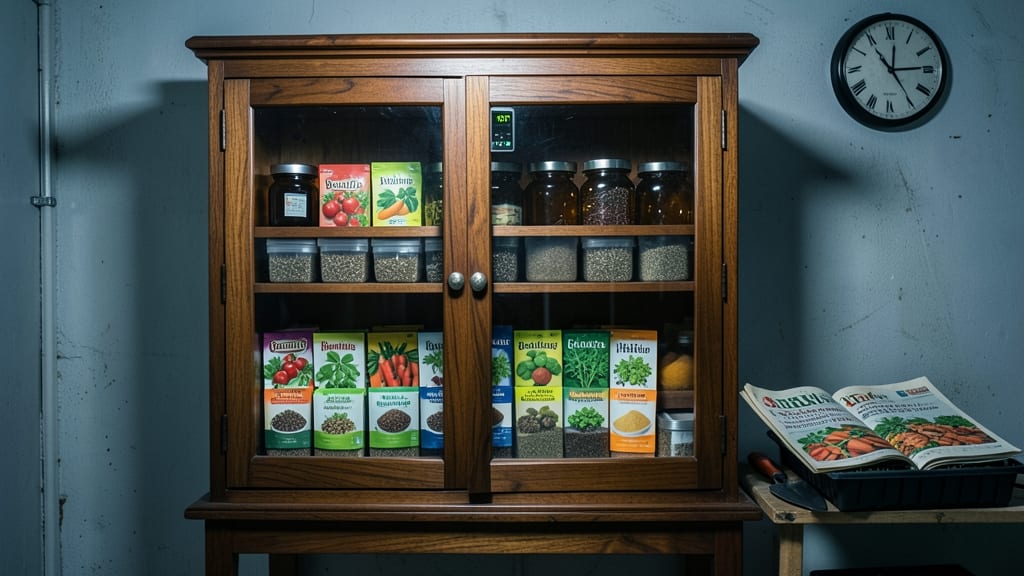
Your lawn seed's lifespan depends on how you store it—seed storage cabinets keep viability high for years by controlling moisture, temperature, and pests. I learned the hard way when my old seed packets sprouted at only 30% after two years, but a proper storage system changed everything.
The right setup preserves germination rates so you always have fresh seed ready when planting season rolls around.
Commercial cabinets offer precise humidity and temperature control, but DIY solutions work too if you use airtight containers with silica gel packets. Seed packets should stay in a cool, dark place—never the fridge, which creates condensation that ruins seeds.
Label everything with the variety and date to track freshness, because even the best storage won't help if you forget what's inside.
With the right setup, your seeds stay viable for 5-10 years or longer, depending on the type. Test germination rates every few years by planting a small batch—if fewer than 80% sprout, it's time to refresh your stock. This small investment saves money and ensures your lawn always starts strong.
Whether you're a home gardener or a landscaper, proper storage means fewer trips to the store and better results every season. Let's get those seeds protected the right way.
📚 In This Guide
- What you need
- Instructions
- Tips and common mistakes
- Wrapping up and next steps
What you need
- ● Seed Storage Cabinet: A climate-controlled unit (e.g., seed vault or refrigerator/freezer cabinet) with humidity control (30-50%) and temperature stability (32–41°F / 0–5°C).
- ● Size: Minimum 1–2 cubic feet (adjust based on seed volume). For bulk storage, opt for 3+ cubic feet.
- ● Desiccant Packets: 5–10 silica gel or clay-based packets (50–100g each) per cabinet to absorb moisture.
- ● Air-Tight Seed Containers: Mylar bags (with oxygen absorbers) OR
- ● Vacuum-sealed jars (1–2 quart size per seed type).
- ● Humidity Monitor: A digital hygrometer (0–100% range) to track conditions.
- ● Labeling Supplies: Waterproof labels + permanent marker (for seed type, date, and variety).
- ○ Index cards (optional, for detailed notes).
- ● Basic Tools: Screwdriver set (for assembly, if applicable).
- ● Ruler/tape measure (for organizing containers).
- ● Backup Power: A USB-powered fan (for air circulation) or battery backup for outages.
- ● Aluminum Foil: For extra moisture barriers in DIY setups.
- ● Seed Catalog/Inventory App: To track expiration dates and viability tests.
- ● Custom Shelving: Adjustable racks to maximize space.
How to set up a seed storage cabinet for long-term viability
Here's how I keep my lawn seeds fresh for years—no fancy equipment needed, just smart organization.
Select a Cool, Dry Location
Choose a spot with a stable temperature between 35-40°F—this is ideal for slowing seed aging. A basement corner or unheated garage works well, but avoid areas with temperature swings or moisture. I test locations by placing a thermometer for a week to confirm consistency before committing.
Keep seeds away from windows, appliances, or vents that might introduce heat or humidity. A closed cabinet with solid doors helps maintain that steady environment. If your space runs warmer, consider a small refrigerator (set to 38°F) as a backup storage unit.
Use Airtight Containers with Desiccant Packs
Store seeds in food-grade, airtight containers—mason jars with rubber gaskets or vacuum-sealed bags work best. I label each container with the seed type and date using a permanent marker. Remove all air before sealing to prevent moisture buildup, which accelerates spoilage.
Place a silica gel desiccant packet inside each container to absorb any residual moisture. Replace these packets every 6-12 months or when they turn from blue to pink. Never use cat litter or coffee grounds as substitutes—they don't provide consistent dryness.
Organize by Seed Type and Age
Group seeds by variety and store older varieties in front so you use them first (FIFO method). I keep a small notebook nearby to track planting dates—seeds like fine fescue last 5-7 years, while Kentucky bluegrass holds viability for 3-5 years under ideal conditions.
Avoid overcrowding containers. Leave 1 inch of space between seed packets to allow for easy access without disturbing others. If using shelves, leave a 2-inch gap between containers to improve airflow and prevent condensation buildup.
Monitor and Maintain Conditions
Check your storage cabinet monthly for signs of moisture, pests, or temperature changes. A simple hygrometer helps track humidity levels—keep them below 40% for optimal seed longevity. If you notice condensation or musty smells, remove seeds immediately and redistribute them in fresh containers.
Rotate seeds every 3-4 months by swapping containers from front to back. This prevents uneven aging from heat sources or airflow patterns. Never store seeds directly on cold floors or near heaters—always use shelves or racks to maintain consistent conditions.
Tips & tricks for optimal seed storage conditions
Here's what I've learned after years of keeping my lawn seeds viable for planting seasons ahead—these little details make all the difference.
Temperature Consistency is Non-Negotiable: That 35-40°F range in Step 1 isn't just a suggestion—it's the sweet spot for seed longevity. I've seen seeds stored at 50°F lose viability twice as fast. If you're using a refrigerator as backup at 38°F, place a small thermometer inside to monitor—some fridges have temperature fluctuations in different sections. Even a 5°F swing can accelerate aging.
Container Selection Matters More Than You Think: While mason jars work well, I've found that vacuum-sealed bags with one-way valves actually perform better for long-term storage. The valves prevent moisture buildup while still keeping air out. If using jars, make sure the rubber gaskets aren't dried out—replace them every 2-3 years. I also add an extra desiccant packet to each container beyond what's recommended, especially for seeds I plan to store beyond 5 years.
Organization Prevents Future Headaches: The FIFO method in Step 3 isn't just about using older seeds first—it's about creating a system where you can quickly locate what you need. I color-code my labels by seed type (blue for fescue, green for bluegrass) and use a permanent marker that won't fade. For high-value seeds, I even take a photo of each container's label and store it digitally with planting notes. This becomes especially valuable when you have multiple varieties.
Pro Tips for Seed Storage Cabinets
- Here's what I've learned after years of keeping my lawn seeds viable for planting seasons ahead—these little details make all the difference.
- Temperature Consistency is Non-Negotiable: That 35-40°F range in Step 1 isn't just a suggestion—it's the sweet spot for seed longevity.
- Container Selection Matters More Than You Think: While mason jars work well, I've found that vacuum-sealed bags with one-way valves actually perform better for long-term storage.
Frequently asked questions
Got questions about seed storage cabinets?
You’re not alone! Here are answers to the most common concerns—so you can keep your lawn seeds safe and ready for planting.
What temperature and humidity levels are ideal for seed storage cabinets?
Aim for 35–40°F (2–4°C) and 30–50% humidity to maximize seed viability. Too warm or dry can accelerate deterioration, while excess moisture risks mold. Climate-controlled cabinets automate this balance, ensuring optimal conditions year-round.
How long can seeds last in a seed storage cabinet?
With proper climate control, most lawn seeds retain viability for 5–10+ years. Factors like seed type (e.g., cool-season vs. warm-season grasses) and storage conditions play a role. Test germination periodically—especially after 2–3 years—to confirm freshness.
Are seed storage cabinets worth the investment over DIY solutions?
DIY methods (like refrigerators or cool basements) work short-term, but cabinets offer consistent, long-term protection with built-in monitoring. They’re ideal for serious gardeners or professionals storing large seed inventories—paying off in reliability and seed savings.
What should I do if my seeds smell musty or look moldy?
Discard affected seeds immediately—mold or off-odors signal spoilage. Prevent future issues by:
- Ensuring your cabinet’s humidity controls are calibrated.
- Using airtight, moisture-resistant containers.
- Inspecting seeds before storage (dry them thoroughly first).
Can I store other items (like tools or fertilizers) in a seed storage cabinet?
No—seed storage cabinets are designed for seeds only. Fertilizers, tools, or chemicals can introduce contaminants (e.g., fumes, moisture) that compromise seed viability. Keep them in separate, labeled storage to avoid cross-contamination.
Wrapping up and next steps
Investing in a seed storage cabinet is a game-changer for preserving the quality and longevity of your lawn seeds—especially in unpredictable climates. 🌱 By controlling temperature, humidity, and light exposure, you’re not just storing seeds; you’re safeguarding future lawns, gardens, and even heirloom varieties for years to come.
Whether you’re a homeowner, landscaper, or seed saver, the right cabinet ensures your seeds stay viable, ready, and full of potential.
Ready to take the next step? Start by assessing your seed storage needs—whether it’s a compact unit for a small collection or a larger system for bulk storage.
Then, explore options that fit your budget and space, and don’t forget to check out reviews to find the best fit for your climate. Your future lawns will thank you!