
Container Gardens
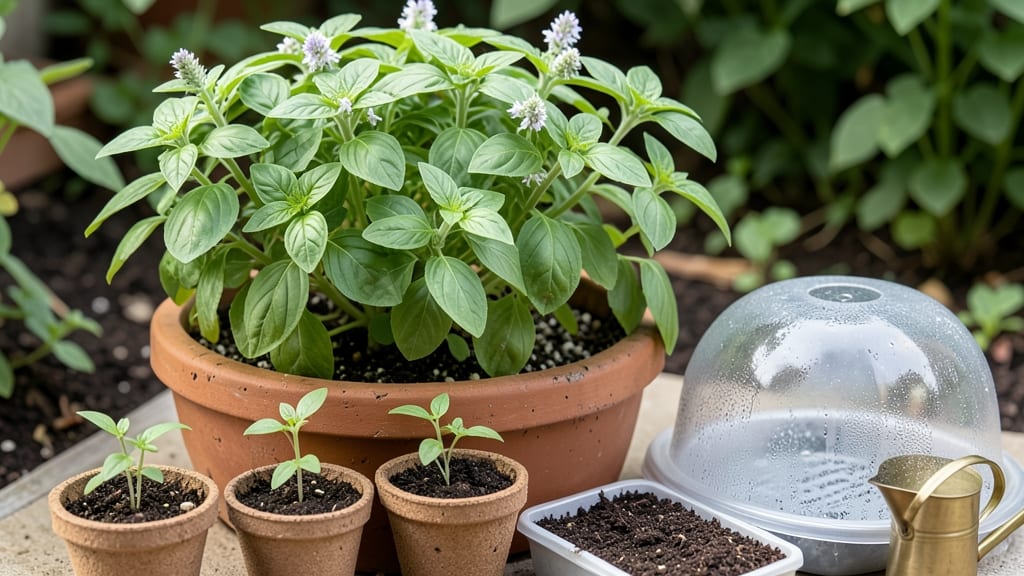
Growing basil from seed in containers means fresh, fragrant harvests on your windowsill or balcony—no twisty stems or sad-looking plants. 🌱 I’ve turned my kitchen into a mini herb garden this way, and the secret starts with the right container and soil mix.
Basil thrives in 4-6 inch deep pots with drainage holes, and a lightweight potting mix keeps roots happy. Skip the garden soil—it’s too heavy and can drown seeds. Plant 2-3 seeds per container (they germinate fast) and keep the soil moist but not soggy.
Within 2-3 weeks, you’ll see tiny leaves unfurling. Pinch the tops when they’re 4-6 inches tall to encourage bushier growth. The smell alone is worth the effort—imagine snipping fresh basil for pesto anytime you want. This method works year-round, even in small spaces.
Troubleshoot leggy seedlings by moving them to brighter light immediately. Ready to grow yours?
📚 In This Guide
- What you need
- Instructions
- Tips and common mistakes
- Wrapping up and next steps
What you need
- ● Basil seeds: 10–20 seeds (choose sweet basil, Genovese, or Thai varieties for best results).
- ● Containers: 2–4 small pots (4–6 inches deep) for seedlings, or
- ● 1 larger container (8+ inches deep) with drainage holes for direct sowing.
- ● Potting mix: 2–3 cups of high-quality, well-draining seed-starting mix (avoid garden soil—it’s too dense!).
- ● Drainage tray or saucer: To catch excess water and prevent root rot.
- ● Spray bottle or watering can: With a fine mist setting for gentle watering.
- ● Grow lights or sunny windowsill: Basil needs 6+ hours of light daily (south-facing window or LED grow lights work best).
- ○ Plastic wrap or humidity dome: Optional but helpful for keeping seeds moist while germinating.
- ● Fertilizer: A balanced, water-soluble fertilizer (5-5-5 or 10-10-10) for when seedlings sprout.
- ● Seedling heat mat: Speeds up germination if your home is chilly (<60°F).
- ● Pruning shears: For harvesting and shaping plants as they grow.
- ● Herb labels: To keep track of varieties if growing multiple types.
Step-by-step instructions for growing basil from seed in containers
Here's how to grow lush, flavorful basil from seed—no twisty stems or leggy disasters in sight.
🌱 Step 1: Prepare Containers and Seed Starting Mix
Use 4-inch diameter pots or cells with drainage holes—basil roots need room to spread without crowding. Fill each container with sterile seed-starting mix (never garden soil—it compacts and suffocates tender roots). I like to mix in a handful of perlite per gallon of mix to improve drainage and prevent waterlogging.
Moisten the mix until it feels like a damp sponge—squeeze gently, and it should hold together but not drip. Press the soil down lightly with your fingers to create a firm, even surface. This prevents seeds from floating to the top when you water. I use a small wooden stick to make a tiny dimple for each seed—just enough to cover it lightly.
🌱 Step 2: Sow Seeds and Maintain Ideal Germination Conditions
Plant 2-3 seeds per pot at a depth of ¼ inch—any deeper and they’ll struggle to push through the soil. Cover them with a fine layer of mix, then mist gently with a spray bottle until the surface looks uniformly damp. Basil seeds germinate best at 70-75°F, so place the pots in a warm spot like on top of the fridge or near a heat mat.
Cover the pots with clear plastic wrap or a humidity dome to trap moisture and warmth. Check daily for condensation on the plastic—this means the environment is just right. Germination takes 7-14 days, but don’t be tempted to water again until the soil feels dry to the touch beneath the surface. Overwatering now is the fastest way to rot those tiny seeds before they even sprout.
☀️ Step 3: Provide Bright Light and Prevent Leggy Growth
The moment you see first true leaves (not the initial seed leaves), remove the plastic wrap immediately. Basil seedlings need 6-8 hours of bright, direct light daily—a south-facing window works, but most homes lack enough intensity. I supplement with a grow light kept 3-4 inches above the plants for 14-16 hours per day. You’ll know it’s working when seedlings grow sturdy and dark green instead of stretching toward the light.
Rotate the pots a quarter turn daily so plants grow straight instead of leaning. If you notice stems growing long and thin with leaves spaced far apart, your light is too weak or too far away. Pinch the leggy growth back to encourage bushier growth—this is the secret to preventing those twisty stems later on.
💧 Step 4: Water and Fertilize for Strong, Flavorful Plants
Once seedlings have 3-4 true leaves, transplant the strongest one per pot to give roots space. Water at the base only—never from above, or you’ll risk fungal diseases. Let the top ½ inch of soil dry out between waterings, but never let pots sit in saucers of water. Basil hates soggy feet.
Feed with a balanced liquid fertilizer (10-10-10) diluted to half strength every 2 weeks starting when plants reach 4 inches tall. You’ll taste the difference in flavor when you harvest—strong, sweet basil comes from well-fed plants. I also sprinkle a pinch of Epsom salt (magnesium sulfate) around the base monthly for extra vigor.
✂️ Step 5: Harvest and Prune for Continuous Growth
Start harvesting outer leaves when plants reach 6 inches tall—this encourages bushier growth. Never take more than ⅓ of the plant at once, or you’ll shock the basil into flowering. The best time to harvest is early morning after dew has dried but before the heat of the day sets in.
Pinch back the top sets of leaves when the plant reaches 12 inches to promote branching. This is the key to preventing those long, spindly stems. If you see flower buds forming, snip them off immediately—basil flavors turn bitter once it flowers. With proper care, your container basil will keep producing harvest-ready leaves for months.
Tips & tricks for thriving container-grown basil
Here's what nobody tells you about growing basil that actually thrives in containers.
Seed Starting Secret: The ¼-inch depth for planting seeds might seem shallow, but it's crucial—deeper planting causes seeds to struggle to push through the soil. I've learned the hard way that even ⅛-inch too deep can delay germination by days. Use a toothpick to create those dimples, then cover seeds with a whisper-thin layer of mix. This tiny detail makes all the difference when waiting for those first sprouts.
Lighting Strategy: That 6-8 hours of bright light requirement is non-negotiable for sturdy growth. I've seen basil stretch toward windows like sunflowers when natural light isn't sufficient. If your south-facing window isn't cutting it, invest in a LED grow light—they're energy-efficient and produce the full spectrum basil needs. Position it 3-4 inches above plants and keep it on for 14-16 hours daily to prevent leggy growth.
Pruning Technique: The 12-inch pinch might seem drastic, but it's the key to bushy, productive plants. When you see that top set of leaves forming, snip just above a leaf node where two leaves meet. This encourages branching that produces more harvestable leaves. I do this every 6-8 weeks throughout the growing season—it's the secret to preventing those twisty stems everyone complains about.
Fertilizer Timing: Starting that 10-10-10 fertilizer at the 4-inch mark gives plants exactly what they need when they need it. I've ruined batches by fertilizing too early—young seedlings can't handle the nutrients yet. The monthly Epsom salt boost is optional but makes a noticeable difference in leaf color and flavor. Always water plants first, then apply fertilizer to prevent root burn.
Pro Tips for Growing Basil From Seed In Containers
- Here's what nobody tells you about growing basil that actually thrives in containers.
- Seed Starting Secret: The ¼-inch depth for planting seeds might seem shallow, but it's crucial—deeper planting causes...
- Lighting Strategy: That 6-8 hours of bright light requirement is non-negotiable for sturdy growth. I've seen basil st...
Frequently asked questions
Got questions about growing basil from seed in containers? You’re not alone! Here are some of the most common concerns—and their easy solutions—to help you grow lush, flavorful basil like a pro.
How long does it take for basil seeds to germinate?
Basil seeds typically sprout in 7–14 days under ideal conditions—warm soil (70–80°F), consistent moisture, and indirect light. If you’re impatient, try a soaking method (soak seeds in warm water for 24 hours) to speed things up. Patience pays off—don’t give up before 2 weeks!
What’s the best container size for growing basil?
Aim for containers at least 6–8 inches deep and wide per plant (or 12+ inches for multiple plants). Basil has shallow roots but needs room to thrive. If space is tight, opt for self-watering pots or hanging baskets—just ensure drainage holes are present to avoid soggy roots.
Can I grow basil in containers indoors year-round?
Yes! Basil loves indoor life with bright, indirect light (a south-facing window or grow lights work best). Keep temps between 65–75°F and maintain humidity (mist leaves or use a pebble tray). Watch for leggy growth—if stems stretch too tall, supplement with a grow light to keep it compact.
Why are my basil seedlings turning yellow or wilting?
Yellow leaves often signal overwatering (check soil moisture—it should be damp but not soggy) or nutrient deficiency (feed with diluted fish emulsion every 2–3 weeks). Wilting can mean underwatering or root stress—ensure your container has drainage and repot if roots are circling. Pests like aphids can also cause stress—spray with soapy water if needed.
Can I reuse last year’s basil container for new seeds?
Just sterilize it first to prevent disease. Scrub with soapy water, rinse well, and soak in a 1:10 bleach-water mix for 10 minutes (rinse thoroughly). Old soil can harbor pathogens, so replace it with fresh, well-draining potting mix to give your new seeds a clean start.
Wrapping up and next steps
Growing basil from seed in containers is a rewarding journey that brings fresh, fragrant herbs right to your doorstep—literally! With the right setup, patience, and care, you’ll enjoy a thriving plant that’s perfect for cooking, garnishing, or even sharing with neighbors. 🌱
Now that you’re equipped with the knowledge, why not take the next step? Start with a small batch of seeds, experiment with different containers, and let your green thumb shine. Before you know it, you’ll be harvesting basil like a pro—and maybe even inspiring others to grow their own!