
Lawn
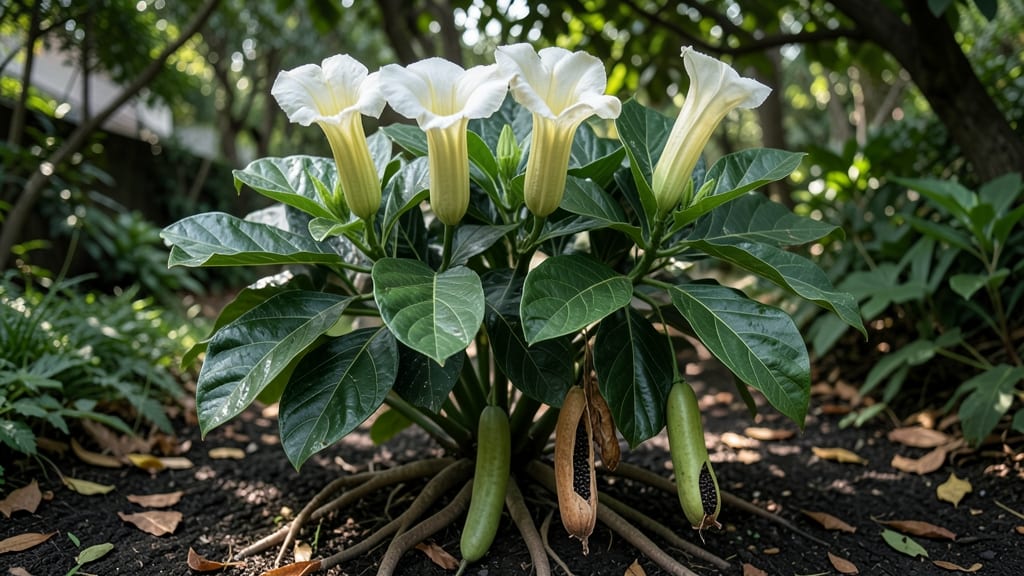
Handling devil's trumpet seed pods means securing next year's dramatic, fragrant blooms—if you play it right. 🌿 These iconic pods are your bridge to lush, cold-hardy plants, but timing and technique matter more than you'd think.
One wrong move and you'll lose the seeds to mold or pests before they even sprout.
Start by harvesting pods when they turn yellow and start splitting open—usually 4-6 weeks after flowering. Wear gloves (the seeds are toxic) and extract the gel-filled seeds carefully, then let them dry on paper towels for 3-5 days to prevent rot.
The trickiest part? Germination can take 30-60 days if done right, or never if you rush it.
Once sprouted, these seedlings need bright light and consistent moisture to avoid leggy, weak stems. Keep them warm (around 70°F) until they develop true leaves, then gradually harden them off before transplanting. With patience, you'll watch those trumpet-shaped blooms return year after year—just like the pros.
Fair warning: Brugmansia thrives in zones 9-11, so if you're in colder areas, treat them as annuals or overwinter indoors. The payoff? A backyard that smells like a tropical paradise—even if your lawn isn't exactly lush. Let's get those seeds growing!
📚 In This Guide
- What you need
- Instructions
- Tips and common mistakes
- Wrapping up and next steps
What you need
- ● Devil’s trumpet seed pods: 5–10 mature, dried pods (harvested from healthy plants or purchased from a reputable supplier). Pro tip: 💡 Ensure pods are fully brown and papery—green pods won’t germinate!
- ● Seed-starting mix: 1–2 gallons of sterile, well-draining potting soil (avoid garden soil to prevent mold). Look for labels like "seed-starting mix" or "cactus/succulent blend."
- ● Containers: Option 1: 4–6 small pots (3–4 inches deep) with drainage holes.
- ● Option 2: A single shallow tray (6+ inches deep) with drainage holes.
- ● Drainage trays or saucers: 1–2 to catch excess water.
- ● Spray bottle: For gentle watering (avoids disturbing seeds).
- ● Plastic wrap or humidity dome: To retain moisture during germination.
- ● Grow lights or sunny windowsill: A south-facing window or LED grow lights (12+ hours of light daily).
- ● Labels & markers: To track seed varieties and planting dates.
- ● Seedling heat mat: Speeds up germination in cooler climates (70–75°F ideal).
- ● Fertilizer: A balanced, water-soluble fertilizer (5-10-5 ratio) for post-germination growth.
- ● Pruning shears: For trimming leggy seedlings later.
- ● Garden gloves: Devil’s trumpet has prickly pods—protect your hands! 🧤
- ● Outdoor hardening tray: A mesh or ventilated container for acclimating seedlings to outdoor conditions.
Step-by-step guide to harvesting and storing Devil’s trumpet seed pods
Turn this season’s blooms into next year’s plants with minimal effort—here’s how to handle those striking seed pods.
🌿 Step 1: Identify and Harvest Mature Seed Pods
Devil’s trumpet (Brugmansia spp.) seed pods turn from green to brown and develop a papery texture when fully mature—usually 8-12 weeks after flowering. Wait until pods split open slightly on their own; forcing them too early yields immature seeds that won’t germinate. I like to harvest on a dry morning when the pods are crisp and brittle to the touch.
Use clean, sharp pruning shears to snip the entire pod from the stem, leaving a ¼-inch stem attachment. This prevents moisture loss and keeps seeds viable longer. Place pods in a paper bag (not plastic) to catch any seeds that may drop during transport. Label each bag with the variety and harvest date—some Brugmansia hybrids produce seeds with unpredictable traits.
🪴 Step 2: Extract and Clean the Seeds
Once home, gently squeeze the dried pods over a clean white tray to release the seeds. Devil’s trumpet seeds are large, flat, and dark brown—about the size of a kidney bean. Discard any seeds that appear shriveled, discolored, or smaller than ½ inch long, as these won’t germinate well. I use a fine mesh strainer to sift out debris while keeping seeds intact.
For extra precaution, soak viable seeds in a 10% bleach solution for 5 minutes to sterilize the outer coating, then rinse thoroughly with water. This step prevents fungal issues during storage. Lay seeds out on a paper towel to dry completely for 24 hours in a warm, dry place before storing. Properly dried seeds last 2-3 years in a cool, dark spot.
⏰ Step 3: Stratify Seeds for Cold-Stress Germination
Devil’s trumpet seeds require a 6-8 week cold stratification period to mimic winter conditions and break dormancy. Place seeds in a sealed plastic bag with a damp (not soggy) paper towel, then refrigerate at 35-40°F. Check weekly—if the towel dries out, mist lightly with water. After 8 weeks, seeds should feel slightly softened when pressed gently.
This cold treatment is critical; without it, germination rates drop below 20%. I’ve found that seeds stratified in late fall germinate best when sown in early spring. Once stratification is complete, sow seeds ½ inch deep in well-draining seed-starting mix at 70-75°F for optimal sprout development.
💧 Step 4: Prepare for Spring Planting
In early spring, sow stratified seeds in 3-inch pots filled with a mix of 50% peat moss and 50% perlite to prevent rot. Keep the soil consistently moist but never waterlogged—overwatering at this stage causes damping-off. Place pots under a grow light for 14-16 hours daily to prevent leggy growth.
Seedlings typically emerge in 10-14 days, but some varieties may take up to 3 weeks. Once 2-3 true leaves appear, transplant seedlings into 5-inch pots with standard potting mix. Harden off seedlings outdoors for 10 days before planting in the garden after the last frost date—Devil’s trumpet thrives in USDA Zones 9-11 and needs protection in cooler climates.
Tips & tricks for perfect Devil's trumpet seed pod harvesting
A few key insights will help you maximize germination rates and avoid common pitfalls when handling these delicate seed pods.
Timing is Everything: The 8-12 week window after flowering is critical for harvesting mature pods. I've learned the hard way that harvesting too early results in seeds that won't germinate—look for pods that naturally begin splitting open on their own. This natural splitting indicates the seeds have fully matured and are ready for collection. The crisp, brittle texture is your best indicator of readiness, especially when harvested on a dry morning when moisture levels are low.
Storage Wisdom: After the 24-hour drying period on paper towels, store seeds in airtight containers with silica gel packets to absorb any residual moisture. I've found that properly dried seeds maintain viability for up to 3 years when kept in a cool, dark place. The silica gel is particularly important for Devil's trumpet seeds, as they're prone to mold if any moisture remains. Label each container with the harvest date to track freshness—older seeds may require slightly longer stratification periods.
Cold Treatment Technique: The 6-8 week cold stratification at 35-40°F is non-negotiable for breaking dormancy. I've had success using the refrigerator's crisper drawer, which maintains consistent temperatures. For visual confirmation of success, press a seed gently after 8 weeks—it should feel slightly softened compared to when you started. This tactile check is more reliable than just tracking time, as some varieties may respond faster or slower to cold treatment.
Pro Tips for Devil'S Trumpet Seed Pod
- A few key insights will help you maximize germination rates and avoid common pitfalls when handling these delicate seed pods.
- Timing is Everything: The 8-12 week window after flowering is critical for harvesting mature pods.
- Storage Wisdom: After the 24-hour drying period on paper towels, store seeds in airtight containers with silica gel packets to absorb any residual moisture.
Frequently asked questions
about Devil’s Trumpet seed pods—here’s what you need to know before planting!Can Devil’s Trumpet survive winter in my climate?
Devil’s Trumpet (Brugmansia) is not frost-tolerant—it thrives in USDA Zones 9-11. In colder zones, grow it as an annual or overwinter seeds indoors in pots. If you’re in Zone 8 or below, consider a greenhouse or dig up tubers before the first frost.
How long does it take for seed pods to form after flowering?
After blooming (typically 6–8 weeks post-planting), seed pods appear in 4–6 weeks. They start green, turn yellow, then brown and papery as they dry. Harvest them when they rattle easily—usually 8–10 weeks after flowering. Patience is key!
What’s the best alternative if Devil’s Trumpet is too tricky?
Try Datura (Jimsonweed) for similar exotic blooms but easier care, or Petunia for cold-hardy annuals with trumpet-shaped flowers. For lawn-friendly options, consider Lobelia or Salvia—both thrive in cooler climates and attract pollinators.
Why aren’t my seed pods developing?
Check these common issues:
- Lack of pollinators: Hand-pollinate with a soft brush if bees/hummingbirds are scarce.
- Over-fertilizing: Too much nitrogen = more leaves, fewer flowers/pods. Use a balanced 10-10-10 fertilizer instead.
- Cold stress: Devil’s Trumpet needs consistent warmth (60°F+) to set pods. Move pots indoors if nights dip below 50°F.
Can I save seed pods for next year’s lawn planting?
Yes! Collect dry pods, crack them open to release seeds, and store them in a cool, dry place (like a paper envelope). Plant them in spring after the last frost. However, Devil’s Trumpet grows best from cuttings—seeds may take longer to mature.
Wrapping up and next steps
The devil’s trumpet seed pod is a stunning, low-maintenance addition to your lawn that thrives even in colder climates—perfect for gardeners eager to experiment with bold, frost-hardy blooms! 🌱 With the right soil, spacing, and care, you’ll soon enjoy its dramatic trumpet-shaped flowers and unique seed pods, adding year-round interest to your outdoor space.
Ready to level up your garden game? Start by gathering your supplies, then plant these seeds this fall for a showstopping display next spring. Your future lawn will thank you! 🌿