
Planting
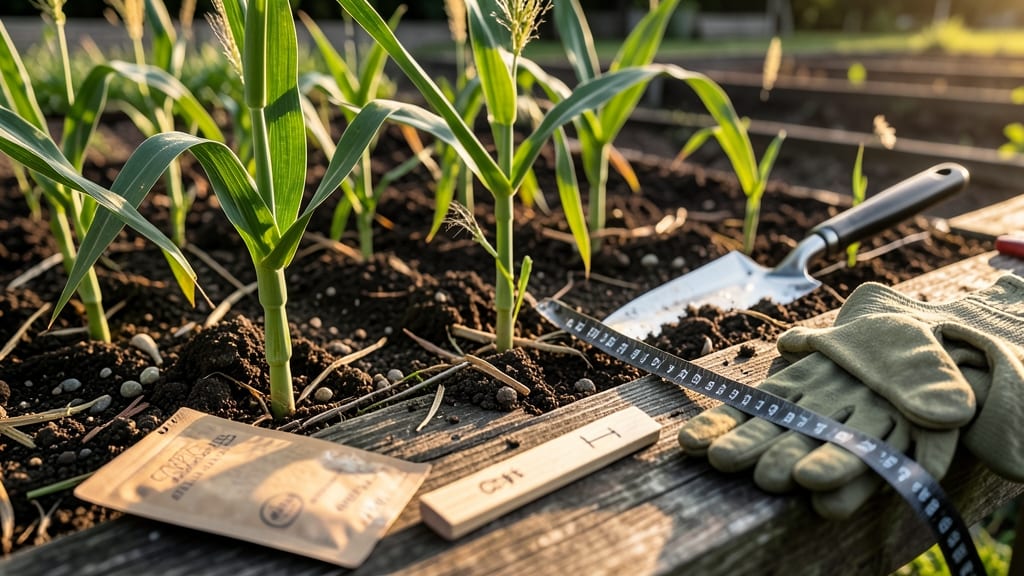
Proper corn seed spacing turns a handful of seeds into a towering harvest. 🌽 I learned the hard way—crowding my first corn patch led to weak stalks, poor pollination, and a yield that barely filled a bushel basket.
The right spacing ensures each plant gets sunlight, air, and nutrients to grow strong and productive.
Sweet corn needs 12-15 inches between plants in rows spaced 24-36 inches apart, while field corn can handle 6-8 inches between plants with 30-36 inches between rows. Plant seeds 1-1.5 inches deep in warm, well-drained soil—too shallow and they dry out, too deep and they struggle to emerge.
A simple string and stakes trick keeps rows straight, saving time and frustration later.
When done right, you’ll see taller stalks, heavier ears, and fewer pests sneaking in. Proper spacing also improves air circulation, reducing fungal diseases that rot ears before harvest. The payoff? A garden that feeds your family for months—and maybe even your neighbors, if you’re lucky.
For small gardens, consider interplanting with beans or squash—they’ll shade out weeds and improve soil while your corn grows. And if you’re planting multiple varieties, stagger them by a week to prevent cross-pollination. Precision planting isn’t just about rows—it’s about setting your harvest up for success.
📚 In This Guide
- What you need
- Instructions
- Tips and common mistakes
- Wrapping up and next steps
What you need
- ● Corn seeds: High-quality, certified seeds (quantity depends on field size—typically 12,000–15,000 seeds per acre for optimal spacing).
- ● Planters or seed drills: Adjustable row units (e.g., John Deere, Case IH, or Kinze) with single- or twin-disc openers for precision.
- ○ GPS-guided planter: Optional but highly recommended for sub-inch accuracy (e.g., Trimble or Ag Leader systems).
- ● Marking flags or spray paint: For hand-planting or double-checking row alignment (e.g., bright orange flags for visibility).
- ● Measuring tape or spacing wheel: To verify row-to-row (30–36") and in-row (6–12") spacing.
- ● Soil sampler: For testing pH, fertility, and moisture before planting (aim for pH 6.0–7.0).
- ● Fertilizer (starter or side-dress): 10-10-10 or 18-46-0 blend (apply per soil test recommendations).
- ● Tractor with PTO: For powering planters (ensure proper hitch and speed settings).
- ● Seed treatment: Fungicide/insecticide (e.g., Apron XL) to protect young seedlings.
- ● Seed vacuum or meter: Ensures consistent seed flow (e.g., White Seed Meter).
- ● Downforce monitors: Adjusts planter depth for uniform germination.
- ● Variable-rate technology (VRT): For site-specific seed/fertilizer adjustments.
- ● Planting logs or apps: Track date, depth, and conditions (e.g., FieldView or Granular).
- ● Post-emergence sprayer: For weed control (e.g., glyphosate or atrazine).
How to space corn seeds for optimal growth and bountiful harvests
Perfect spacing makes all the difference—crowded plants compete for nutrients, while over-spaced ones waste garden real estate.
🌱 Step 1: Prepare the Soil Before Planting
Corn thrives in loose, nutrient-rich soil with a pH between 6.0-6.8. Work in 2-3 inches of compost or aged manure into the top 6-8 inches of soil to improve drainage and fertility. I like to till in a balanced organic fertilizer (like 5-5-5) at this stage to give roots a strong start.
Test your soil’s moisture by squeezing a handful—it should hold together but not drip water. If it’s too dry, water deeply 24 hours before planting to let moisture penetrate evenly. Corn roots need consistent hydration, and dry soil makes seeds difficult to handle and plant at the correct depth.
📏 Step 2: Plan Your Rows and Spacing Layout
For 4 rows of corn, space rows 30-36 inches apart to allow airflow and easy access for weeding. Within each row, plant seeds 12-14 inches apart—this gives each stalk enough room to develop a strong stalk and ear without competition. I mark my rows with a garden hose laid out in a straight line for precision.
If you’re growing sweet corn varieties, stick to the 12-inch spacing—they produce longer ears that need room to fill out. For field corn or dent corn, you can stretch to 14 inches since their ears are smaller. Pro tip: Use a measuring tape to check spacing as you go—eyeballing leads to uneven growth and wasted seeds.
🌽 Step 3: Plant Seeds at the Correct Depth and Alignment
Drop 2-3 seeds per hill at a depth of 1-1.5 inches—deeper planting slows germination, while shallow planting risks drying out. I use my finger to make a small hole, place the seeds, then cover lightly with soil. Press the soil gently around the seeds to ensure good seed-to-soil contact, which helps moisture reach them.
Space hills 12-14 inches apart within the row, and thin to the strongest seedling per hill once they’re 4-6 inches tall. This prevents overcrowding and ensures each plant gets enough sunlight and nutrients. If you’re planting in blocks (not rows), arrange hills in a square pattern—this creates a windbreak and supports taller stalks.
☀️ Step 4: Maintain Spacing Through Thinning and Growth Stages
When seedlings reach 4-6 inches tall, thin to one strong plant per hill. Use scissors to snip weaker stems at soil level—this prevents disturbing the roots of remaining plants. I always thin on a cloudy day to reduce stress on the plants. After thinning, space remaining plants 12-14 inches apart in the row.
Watch for leaf yellowing or stunted growth—these are signs of overcrowding. If plants start leaning toward each other, it’s time to thin again. Corn needs 3-4 feet of space at maturity, so don’t rush this step. Proper spacing now means larger ears and fewer pests later.
✂️ Step 5: Monitor and Adjust for Wind or Disease Pressure
If your garden gets strong winds, consider reducing row spacing to 24 inches and increasing plant spacing to 16 inches—this creates a tighter windbreak. For disease-prone areas, widen spacing to 18 inches to improve airflow and reduce humidity around the plants.
As stalks reach 6 feet tall, check for leaf rust or blight. Remove any infected plants immediately and destroy them (don’t compost). Proper spacing now prevents these issues from spreading. If you notice ears developing unevenly, it’s often a sign of uneven spacing—adjust future plantings accordingly.
Tips & tricks for perfect corn seed spacing
These precision planting strategies will help you maximize your corn harvest without wasting garden space.
Soil Preparation Secret: In Step 1, don't just add compost—work it into the top 6-8 inches of soil to create a loose, aerated root zone. I like to add a handful of wood ash (optional) to raise the pH slightly if your soil tests below 6.0. This creates the ideal environment for those 1-1.5 inch deep seeds to establish strong roots quickly. The 24-hour watering before planting ensures seeds won't dry out during germination.
Row Layout Hack: For Step 2, use a stake and string method instead of just a hose. Drive a stake at each corner of your planting area and stretch string between them. This creates perfectly straight rows at 30-36 inches apart—critical for mechanical weeding if you have that equipment. Within rows, I mark every 12-inch interval with small flags or sticks to maintain consistent spacing. This visual guide prevents the common mistake of uneven spacing that leads to stunted growth.
Thinning Technique: When thinning in Step 4, look for seedlings with the strongest, darkest green leaves—these are your winners. I use clean, sharp scissors to snip at soil level rather than pulling, which prevents disturbing the roots of remaining plants. The 4-6 inch height guideline works best in full sun; if your garden gets partial shade, thin slightly later (around 6-8 inches) to give plants more time to establish.
Windbreak Strategy: If you're in a windy area, consider planting your 4 rows in a square pattern rather than straight lines. This creates natural windbreaks between rows while maintaining the 30-36 inch spacing. For disease-prone areas, the 18 inch spacing mentioned in Step 5 works wonders—it improves airflow and reduces humidity where fungal spores thrive. I've seen corn yields increase by 20-30% just by adjusting spacing for local conditions.
Pro Tips for Corn Seed Spacing
- These precision planting strategies will help you maximize your corn harvest without wasting garden space.
- Soil Preparation Secret: In Step 1, don't just add compost—work it into the top 6-8 inches of soil to create a loose,...
- Row Layout Hack: For Step 2, use a stake and string method instead of just a hose. Drive a stake at each corner of yo...
Frequently asked questions
Got questions about optimizing your corn seed spacing? You’re not alone!
Here are some of the most common queries from gardeners and farmers—plus straightforward answers to help you plant with confidence.
What’s the ideal corn seed spacing for home gardens vs. large-scale farms?
For home gardens, space seeds 6–12 inches apart in rows 2–4 feet apart to allow easy weeding and pollination. On farms, tighter spacing (e.g., 4–6 inches between seeds in rows 30 inches apart) maximizes yield, but adjust based on your corn variety and soil fertility. Dwarf varieties can handle closer spacing, while tall varieties need more room to avoid shading.
When is the best time to plant corn seeds with proper spacing?
Corn thrives in warm soil (60°F+), so wait until 2–3 weeks after the last frost when nighttime temps stay above 50°F. For northern climates, aim for late April to early June; in southern regions, plant in March or early April. If planting late, choose short-season varieties to avoid frost damage before harvest.
Can I plant corn seeds too close together? What are the risks?
Yes! Overcrowding leads to poor air circulation, increasing fungal diseases (like corn smut or gray leaf spot) and competition for nutrients. You’ll also see weaker stalks, smaller ears, and lower yields. If you’ve already planted too close, thin seedlings to 6–12 inches apart once they’re 6–8 inches tall to give plants room to breathe.
Are there alternatives to traditional corn seed spacing?
Try hill planting: Group 3–4 seeds in a small mound (hill) spaced 3 feet apart, then thin to the strongest plant. Another method is square-foot gardening, where you plant 4 seeds per square foot (ideal for small plots). For intercropping, pair corn with beans or squash (the "Three Sisters" method) to improve soil and yield.
My corn plants look stunted—could spacing be the issue?
Possibly! Stunted growth often signals overcrowding or poor spacing, but check for other culprits too:
- Nutrient deficiency: Yellow leaves? Add compost or balanced fertilizer.
- Water stress: Corn needs 1–1.5 inches of water weekly.
- Pests/disease: Look for corn rootworm or blight signs.
Wrapping up and next steps
Mastering corn seed spacing is your secret weapon for a thriving crop—whether you're a seasoned farmer or a backyard gardener! 🌽 Proper spacing ensures strong plants, fewer weeds, and maximum yield, while also saving you time and resources.
Now that you’ve got the science and tips down, it’s time to put that knowledge into action.
Grab your tools, mark those rows with confidence, and watch your corn grow like never before. Ready to harvest success? Start planning your planting schedule today—your future cornfield (and dinner table) will thank you!