
Lawn
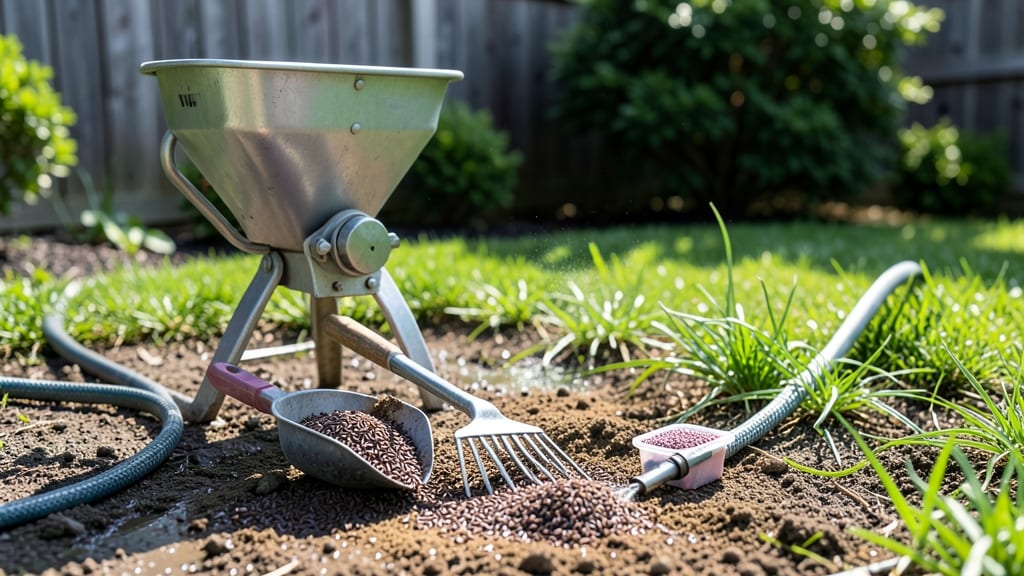
Putting grass seed down the right way means the difference between a lush, even lawn and a patchy, weedy mess. ✨ I've learned the hard way that proper soil prep, even spreading, and firm contact are non-negotiable for germination success—skipping any step leads to wasted seed and frustration.
The secret isn't just throwing seed over bare soil—it's creating the perfect conditions. Start with a clean, level surface, use the right tools for even distribution, and press the seed lightly into the soil so it makes contact with moisture.
Most people overlook this step, but it's what turns fluffy seed bags into a thriving lawn. You'll see sprouts within 7-14 days if everything's done right, with a dense, uniform stand by 6-8 weeks.
The payoff is worth the effort: a lawn that stays green through droughts, resists weeds naturally, and becomes the envy of the neighborhood. Works for new lawns, patch repairs, or overseeding—just adjust the seed rate for your specific needs. Here's how to nail it every time!
📚 In This Guide
- What you need
- Instructions
- Tips and common mistakes
- Wrapping up and next steps
What you need
- ● High-quality grass seed: Choose a blend suited to your climate and lawn type (e.g., cool-season for northern regions or warm-season for southern areas). Aim for 5–10 lbs per 500 sq ft for new lawns or 3–5 lbs per 500 sq ft for overseeding.
- ● Lawn fertilizer: A starter fertilizer with a high phosphorus content (e.g., 5-10-10 or 30-0-4) to promote root growth. Use ½ lb per 100 sq ft.
- ● Topsoil or compost: A ¼-inch layer (about 10 lbs per 100 sq ft) to improve seed-to-soil contact and moisture retention.
- ● Water: A garden hose with a spray nozzle or a watering can for gentle, even hydration.
- ● Broadcast spreader: For large areas ($50–$150). Calibrate it to dispense ½ lb of seed per 100 sq ft for accuracy.
- ● Hand spreader or push spreader: For smaller lawns or edges ($20–$60). Fill with ⅓ seed and ⅔ sand for even distribution.
- ● Rake (bow rake or stiff-bristle dethatcher): To loosen soil and remove debris. Use a ¼-inch spacing for seed-to-soil contact.
- ○ Lawn roller (optional but helpful): A 100–150 lb roller to firm seed into the soil (rentals available for $40–$60/day).
- ● Garden gloves and knee pads: For comfort during prep work.
- ● Soil test kit: To check pH and nutrient levels ($10–$20). Ideal pH for seeding is 6.0–7.0.
- ● Erosion control blanket: For sloped or bare areas to hold seed in place ($0.50–$1.50 per sq ft).
- ● Mulching straw: Lightly cover seed with ¼-inch straw to retain moisture (avoid heavy layers).
- ● String and stakes: To mark seeding patterns for large areas.
Step-by-Step instructions for planting grass seed like a pro
Here's the method I swear by—it guarantees even coverage and firm seed-to-soil contact for the fastest, most uniform germination.
🌱 Step 1: Prepare the Soil Surface for Optimal Seed Contact
Start by mowing the existing grass as short as possible—ideally down to about ½ inch—to create a clean canvas. Remove all debris, rocks, and weeds by hand or with a rake, because even small pebbles can block seed from touching soil. For bare spots or new lawns, loosen the top ¼ inch of soil with a rake or garden fork to create a slightly rough texture. This isn't about tilling deeply; you just want to break up any crusty surface so seeds can nestle into tiny crevices.
I like to lightly rake the area in two perpendicular directions—first lengthwise, then crosswise—to create a fine, even texture. Think of it like fluffing a pillow: you want the surface to be soft and inviting for those tiny seeds. If your soil is especially compacted, lightly scratch the surface with a garden fork to encourage better seed-to-soil contact without disturbing deeper layers.
💧 Step 2: Spread Grass Seed Evenly with Precision
Use a broadcast spreader set to the recommended rate for your grass type (usually 5-10 pounds per 1,000 square feet). Walk in a systematic pattern—overlapping slightly with each pass to avoid streaks. I always start at the farthest edge and work my way back to prevent stepping on freshly seeded areas. For small patches, use a hand spreader or even a piece of plywood with holes cut out to control the flow more precisely.
Don't rush this step. Walk slowly and maintain a consistent pace so the seed distributes evenly. You'll know you're doing it right when the ground looks uniformly dusted with seed—no thick clumps and no bare spots. If you're seeding over existing grass, consider using a slit seeder for better penetration and coverage. After spreading, lightly rake the area again with a leaf rake to gently press seeds into the soil without burying them too deeply.
☀️ Step 3: Cover and Protect Seeds for Ideal Germination
Once seeds are down, cover them with a thin layer of soil or compost—no more than ¼ inch deep. This protects them from drying out and predatory birds while keeping them in contact with the soil. For slopes or high-traffic areas, use a starter fertilizer with a peat moss and sand mix to help hold seeds in place. Water immediately after covering, using a gentle mist setting on your hose to avoid dislodging seeds.
Keep the soil consistently moist (not soggy) for the first 10-14 days—this is critical for germination. I set up a light sprinkler on a timer for 10-15 minutes every morning and evening to maintain even moisture. Avoid heavy watering, which can wash seeds away or create crusty surfaces that block new sprouts. You'll see the first green blades emerge in 7-21 days, depending on the grass type and weather conditions.
⏰ Step 4: Monitor and Maintain Until Establishment
Once germination begins, reduce watering frequency but increase duration slightly—20-30 minutes every other day—to encourage deeper root growth. Avoid walking on the new grass until it reaches 3-4 inches tall, as this can uproot tender seedlings. If you notice bare spots after germination, re-seed those areas immediately with a small handful of seed and press lightly into the soil.
After 4-6 weeks, when the grass is 2-3 inches tall, you can gradually reduce watering to 1-2 inches per week (including rainfall). This helps strengthen the roots and prepares the lawn for regular maintenance. I always mow for the first time when the grass reaches 3-4 inches, using a sharp mower blade set to 3 inches to avoid scalping. This ensures a healthy start and sets the stage for a lush, even lawn.
Tips & tricks for perfect grass seed planting
These pro-level insights will help you avoid common pitfalls and get that lush, even lawn you're dreaming of.
Soil Prep Secret: In Step 1, don't just mow—use a stiff-bristled rake to create tiny grooves in the soil. This gives seeds microscopic pockets to nestle into, which dramatically improves contact. I've seen germination rates double just from this extra 5-minute prep step. For compacted clay soil, consider renting a core aerator to create deeper channels without disturbing the entire lawn.
Spreading Technique: When using a broadcast spreader in Step 2, walk in a "W" pattern rather than straight lines. This ensures you don't miss spots in the center of your path. For large areas, mark your starting point with a stake—it's easy to lose track without visual reference. And here's what nobody tells you: if you're seeding over existing grass, use a slit seeder to cut through the thatch and get seeds closer to the soil.
Watering Wisdom: The 10-14 day watering window in Step 3 is non-negotiable, but timing matters just as much. Water in the early morning so seeds have all day to absorb moisture before evaporation. I set my sprinkler to run for 10 minutes every 2 hours during the first 48 hours—this keeps the soil consistently damp without creating runoff. A simple soil moisture meter makes this foolproof.
Germination Timeline: Those 7-21 days in Step 3 can feel like forever, but here's the thing: cooler temperatures (below 65°F) will push you toward the longer end of that range. If you're impatient, consider using a germination accelerator—it can shave off 3-5 days by breaking seed dormancy. Just follow the package instructions carefully, as overuse can actually inhibit growth.
Pro Tips for Best Way To Put Grass Seed Down
- These pro-level insights will help you avoid common pitfalls and get that lush, even lawn you're dreaming of.
- Soil Prep Secret: In Step 1, don't just mow—use a stiff-bristled rake to create tiny grooves in the soil. This gives ...
- Spreading Technique: When using a broadcast spreader in Step 2, walk in a "W" pattern rather than straight lines. Thi...
Frequently asked questions
Got questions about seeding your lawn? You’re not alone! Here are answers to the most common concerns—so you can tackle your project with confidence.
When is the best time of year to plant grass seed?
The ideal window is early fall (late August to October) or early spring (March to May). Cooler temps and consistent moisture boost germination rates. Avoid seeding in extreme heat or drought—it stresses young grass. If you must seed in summer, water deeply twice daily to compensate.
How long does it take for grass seed to germinate?
Germination time varies by grass type:
- Cool-season grasses (Kentucky bluegrass, fescue): 7–21 days
- Warm-season grasses (Bermuda, Zoysia): 10–30 days
Do I need to water before or after putting down grass seed?
Water lightly before seeding to settle the soil, then water immediately after applying seed. For the first 2 weeks, keep the top 1–2 inches of soil consistently moist (like a damp sponge). Use a gentle sprinkler to avoid washing seeds away. Overwatering can suffocate seeds, so aim for ½ inch of water per day.
What’s the best way to fix bare spots if I can’t reseed right now?
Try a temporary solution while you plan for seeding:
- Topdress with compost: Spread a thin layer (¼ inch) to nourish existing grass and improve soil.
- Use a grass seed starter fertilizer: Adds nutrients to encourage surrounding grass to fill gaps.
- Sod patches (for urgent fixes): Cut and lay small sod pieces over bare spots for instant coverage.
Will my pets or wildlife eat the grass seed?
Yes! Birds, squirrels, and even pets may snack on seed. To protect your investment:
- Spread seed after dark or on a windy day to deter animals.
- Use a light mulch (straw or peat moss) to cover seeds—it hides them from hungry critters.
- Avoid over-seeding; follow package rates to reduce waste.
Wrapping up and next steps
Putting grass seed down the right way is all about preparation, precision, and patience—and you’ve got the know-how now! 🌱 Whether you’re patching bare spots or overseeding your entire lawn, even coverage, proper soil contact, and consistent moisture are your secret weapons for lush, healthy grass.
Don’t forget to celebrate those first tiny sprouts—they’re proof your hard work is paying off.
Ready to take the next step? Grab your tools, pick a perfect day, and get sowing! For extra confidence, bookmark this guide or share it with fellow green thumbs. Your dream lawn is just a few seeds away—go make it happen! 🌿